

When I got my TRS-80 computer in 1980, one of the very first programs I bought for it was Eliza, which was an exceptionally simple implementation of what seemed to be an electronic psychologist. I found it fascinating, and it was extra cool that Eliza was born the same year I was.

Indeed, as pretty much the only kid in town with a computer, I’d love to show Eliza off to my friends, since it was, to our eyes, magic, for reasons that are now clear to me.

Eliza was not artificial intelligence, however. Not even remotely close. Eliza was a simple program that did some clever tricks with text strings, and to a kid in 1980, it was the coolest thing I had ever seen. Little did I know what my own future held in store for me.
Our Segway Future
I’ve been around long enough not to get completely sucked in by hype about what such-and-such a technology is going to do for all of us. Whether it’s 3-D printing, fusion energy, gallium-arsenide chips, or robots that’ll swap out the entire battery from your Tesla and replace it in five minutes, I’ve heard enough nonsense to take it with a grain of salt.
One good example was the Segway, which was a mysterious new product code-named “Ginger” and had plenty of pre-launch hype around it. When it was finally unveiled, Jeff Bezos and Steve Jobs were both amazed, with Job quoted as saying, “If enough people see this machine, you won’t have to convince them to architect cities around it. It’ll just happen.” That’s right. Steve Jobs, the product genius, speculated entire cities would be designed around…………….the Segway.
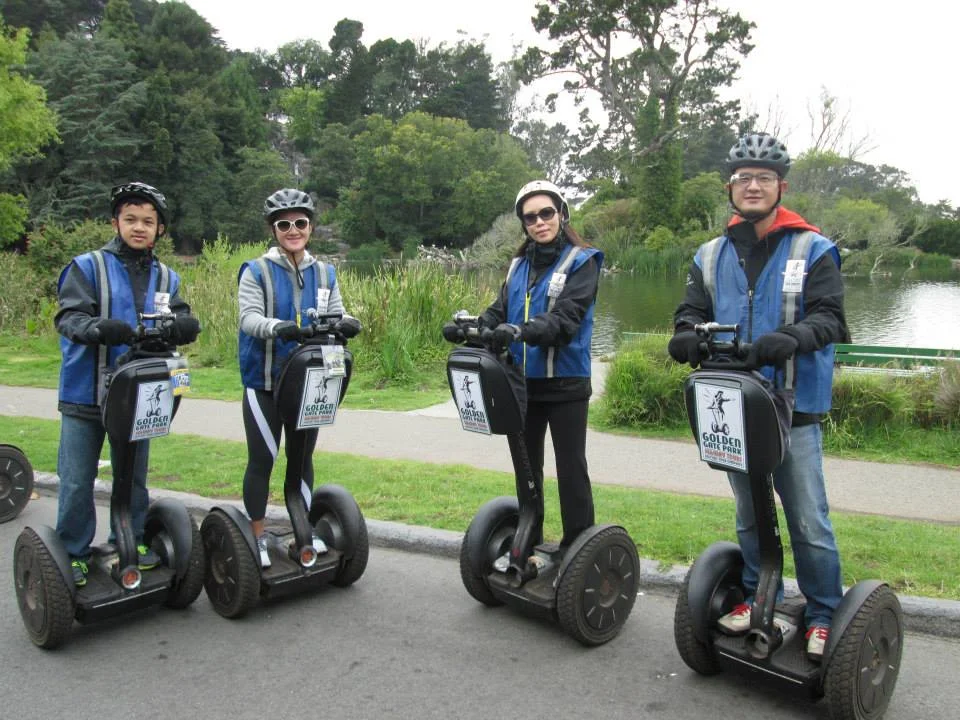
I suppose I don’t need to tell you that none of this came true. In point of fact, the Segway was pretty much a gigantic flop and, in a moment of epic irony, the guy who purchased the remnants of the failed company met tragedy when he died…………..on a Segway………….which went flying off a cliff.
So, yeah, even Jobs missed the mark on this one.
Zuck Bucks
Let’s get back to artificial intelligence itself, though. A few years ago, practically no one was talking about, thinking about, or investing in anything to do with AI. These days, it’s all ANYONE talks or thinks about, and frankly if AI were to vanish instantly in the morning, equity markets would but cut right in half. AI has, oddly, BECOME the market.
I already wrote a very lengthy post about this topic two weeks ago, and considering how much time and energy I put into it, I would encourage you to give it a read. My conclusion at the end of the post remains unchanged: “You think we’re at the tippity-top of the tech bubble? I sure do. This is Roman orgy stuff, people, and with the exception of those able to rip off $100 million from a briefly idiotic Zuck, it isn’t going to end at all well.”
I guess my main issue with the impossibility of Meta “winning” the AI wars is that it just doesn’t make a good story. Gobs of cash do not, and should not, win the day. I understand that there’s this notion that there will be ONLY ONE WINNER in this entire AI battle, and it’s worth trillions to whomever wins, but – – says who? What do they win? What guarantees are there?
If there is, in fact, a huge market ahead, and there’s only one winner, it makes sense to hurl cash around. For instance, if someone came along today with a TRILLION dollars in cash, I’m not convinced they could displace Amazon as a business. Amazon won, and they’ll be on top for decades. Yet what’s happening right now in the market, particularly with respect to gobbling up Nvidia chips and making young men very rich, is a huge crap shoot.
What’s the Problem?
Many use cases for AI have been offered, and it’s evident from what’s happening in software that AI is going to kick many tens of thousands of highly trained software engineers out of a job. However, I can’t help wondering to myself if AI is a solution in search of a problem.
I live in the heart of the Silicon Valley, and although I’m no AI expert, I’m very easily in the top 2% or so of folks with respect to how much I read about and think about this topic. However, I use AI directly maybe a few minutes a week, and if it were to disappear completely, my life wouldn’t be any worse off for it.
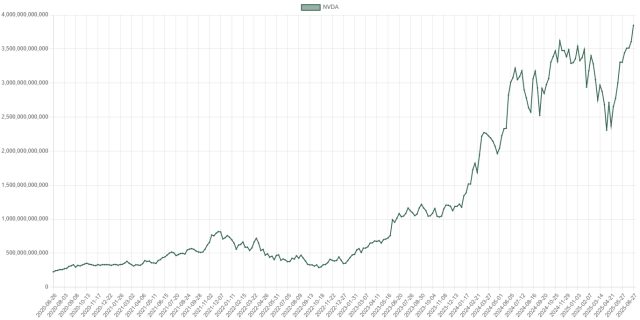
Even so, the AI phenomenon has generated literally TRILLIONS of dollars of shareholder value, most obviously with Nvidia, whose market cap chart is shown below. Just five years ago, NVDA was a niche maker of graphics cards for gamers and Bitcoin miners worth a couple hundred million bucks. These days, its market cap is approaching $4 trillion.
Perhaps the most profound question in the financial markets these days, largely unspoken is – – is there any “there” there? Is there indeed a monstrous, multi-trillion-dollar, sustainable opportunity in the world of AI business? For a mesmerizing analysis of this question, I direct you to Ed Zitron, who writes brilliantly and regularly on this topic. Just as a spoiler alert, his answer to that former question would be NO, NO, A THOUSAND TIMES NO!
I will say this: if Ed is even somewhat correct, you’re going to see a crash with a similar caliber as the financial crisis of 2008. The market is absolutely addicted to AI, and if it doesn’t pan out, watch out.
Gold’s Brain Gym
Thousands of years ago, men had to be strong to thrive. There was hard work to be done, and if you weren’t healthy and muscular, you weren’t going to be useful. Being physically fit was a must.
Times have changed, though. Almost no one HAS to perform much physical labor. Indeed, one glance around any airport or shopping mall in America will quickly prove this point. However, millions of people spend billions of dollars to “artificially” get challenged. They lift weights. They ride bikes. They swim. They subject themselves to TOTALLY voluntary effort in order to increase muscle mass and lose weight.
What for? It isn’t to survive. Maybe it’s to be sexually appealing to the opposite gender. Maybe it’s to live longer. Maybe it’s strictly for ego or social purposes. Whatever the reason, what used to be essential thousands of years ago has now become, for most folks, utterly, utterly optional.
I wonder to myself if the same thing will happen to our thinking. Quick, what’s 12 times 11? Someone a hundred years ago would know instantly. These days? Not so much. And that’s just simple multiplication. How’s your calculus doing these days? See, with all this technology around us, there’s less and less reason to know how to calculate, how to spell, how to write, or even how to think. Machines are doing more and more of it for us.
Will there be a day when a subset of people pays for the privilege of mentally working out? Will there be people who regularly attend some kind of mental “gym“, even though it’s utterly unnecessary, but they just want to keep their brains sharp for no other purpose than keeping their brains sharp? I think so.

Transformation or Calamity?
Sometimes technologies come along that actually do transform society. When Steve Jobs introduced the iPhone in early 2007, he told the audience that one day they would tell their children that they were there to witness it on that day. It probably seemed like a ridiculous hyperbole at the time, but he was right.
Can you imagine life with your mobile devices? Just try to think of what would happen if, tomorrow morning, every single iPhone, Android device, and tablet simply disappeared. It would be just one notch above everyone’s faucets suddenly not producing water. People would absolutely freak out, because they depend on this stuff deeply, and daily.
AI might be like that. Ten years from now, Zuck paying billions of dollars for the top AI talent may be seen as one of the shrewdest investments ever made. After all, Google bought YouTube for $1.65 billion, which seemed really expensive at the time, but I think we can all agree that they got the bargain of the century.
Sadly, only time will tell. It’ll be at least a few years before we have even an inkling as to whether what we’re going through now was wholly or partly nonsense, or instead if AI was right up there with the creation of the microprocessor and the Internet. I’ve been thinking about this stuff my entire life, and I assure you, I’m no closer to an answer than you are. All we know is, no matter what the answer is, the after-effects to that answer are going to be AWFULLY interesting.

