
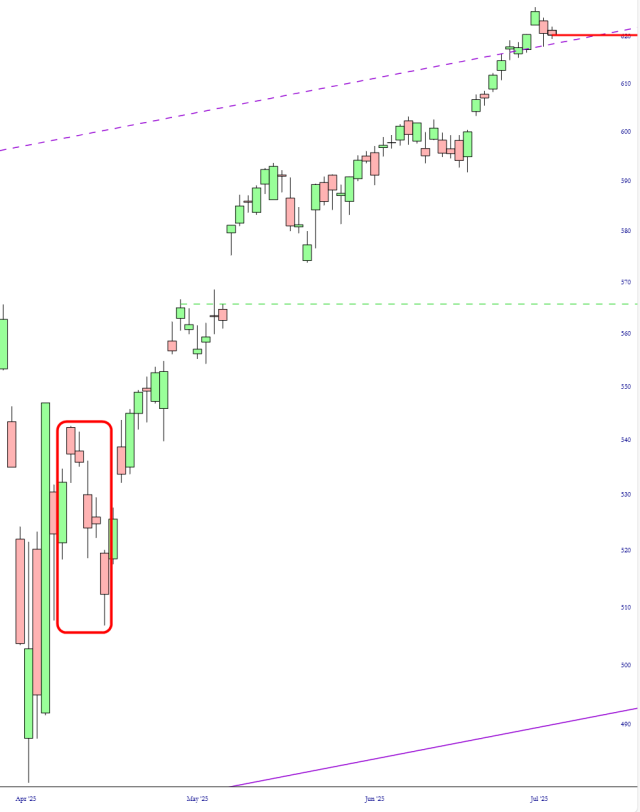
Over the course of over twenty years and well more than 40,000 posts, I think I’ve demonstrated more than any human that I can create content irrespective of market circumstances, but Good God Almighty, people, this is getting to be a challenge. I awake once again to equity futures which are all up fractionally and a market overall which hasn’t had even a modest dip in three months.
Thus, I’m not even going to pretend the market is worth writing about right now. I’ll just follow up my post last night with one other thought related to tech business that I wanted to share. It has to do with scale.
Back in the 1960s and into the early 1970s, there was virtually nothing in the way of entrepreneurship in high tech (or any other industry, for that matter), because it would be preposterous for a small group of individuals to gather the resources to do just about anything relevant in those days. What kind of business were you going to create? Start a new car company? Maybe begin a new steel corporation? Or perhaps you’ll interested in computers and want to start cranking out mainframes?
It just wasn’t going to happen. If you were an individual, you were going to get a job at a big, established company. Sure, you could maybe have a little grocery store in a small town, or maybe you could be a cobbler and fix the shoes in your community. There’s always a way to hang out a shingle. But it simply didn’t make much sense to start an actual new business.
The introduction of microcomputers in the late 1970s changed all of that, particularly with respect to software. I vividly remember in 1982 when my friend Tommy McWilliams appeared in Newsweek magazine, of all places, complete with a color photo, since he had made the princely sum of $64,000 by selling copies of a game he created. In our little town, he was instantly famous, and I confess I was pretty jealous (I was a sophomore in high school, Tommy a junior) at the same and fortune he had attained.
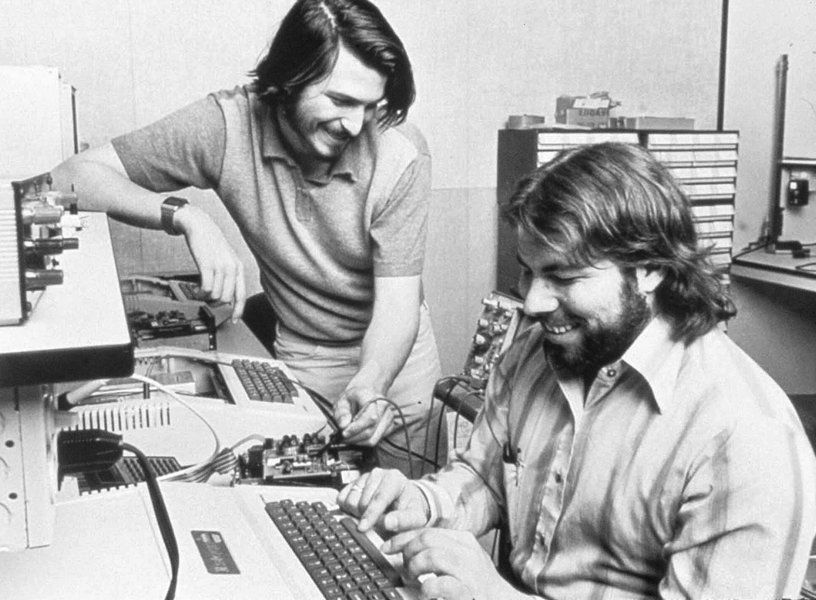
In those days, all kinds of new companies were springing up, both hardware and software, created by small groups of friends (young men, invariably). There was Imagic, Activision, Atari, Apple, the list goes on and on. With a few thousand bucks, and a couple of really good brains, people actually had a chance to create something totally new which, in a few cases, grew into companies that are with us to this very day.
I know a lot about this valley and its history, and the late 1970s and early 1980s was a truly magical time, and it didn’t end there. Even Google was born in the late 1990s with just two guys, and once it was really clear that they were going to be wildly successful, two major VC firms got together and funded them with………$25 million. At the time, it seemed like such a large sum that quite a few stories were written about the momentous investment.
Those days, it seems, are long gone. We appear to have reverted back to the 1960s, because the idea of creating an actual company and growing it into something big is once again preposterous.
What’s the big new industry these days? AI, of course. What does it take to have even a chance of success there? $25 billion? $50 billion? More? There are companies like OpenAI, Anthropic, and Meta with hundreds of billions at their disposal, and the concept of going head-to-head with any of those would be like the people of the Aleutian Islands chain deciding they were going to kick the United States and China off the world economic stage. It’s just dumb.
And that saddens me. It’s not something that anyone could have changed, because these are all parts of the broad cycles of time and industrial development. Yet it’s interesting for me, over my lifespan, to have witnessed the metamorphosis of Big Industry to Entrepreneurship back to Big Industry.
The only lasting after-effect of the transformation is that individuals like me, although not creating a new business per se, can still at least make a living individually by honing their craft in whatever form it may take. So, yeah, I guess I’m that new town cobbler in a different guise.
As I glance back to my quote screens, I see the markets continue to drift higher, so with that I shall shrug my shoulders, deploy this post, and try to think what on Earth I can possibly write about next.