
Let’s thumb through a few interesting continuous commodity charts, shall we?
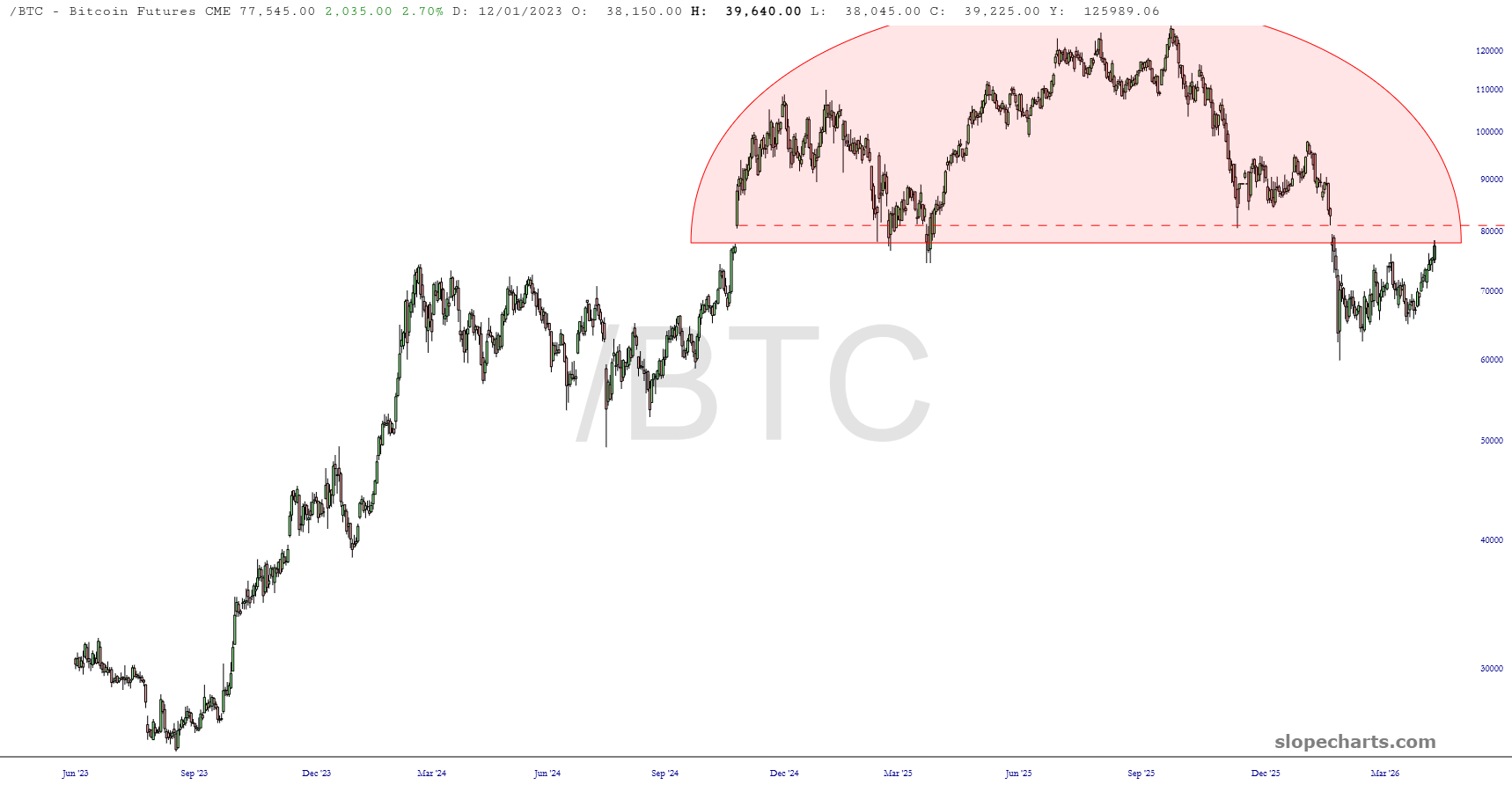
Starting with Bitcoin, this is still a honey of an H&S top. As wrecked as so many index charts are these days, this graph is a true breath of fresh air. That price gap at $81,000 is key, although I’m not sure it’ll even recover to that degree.
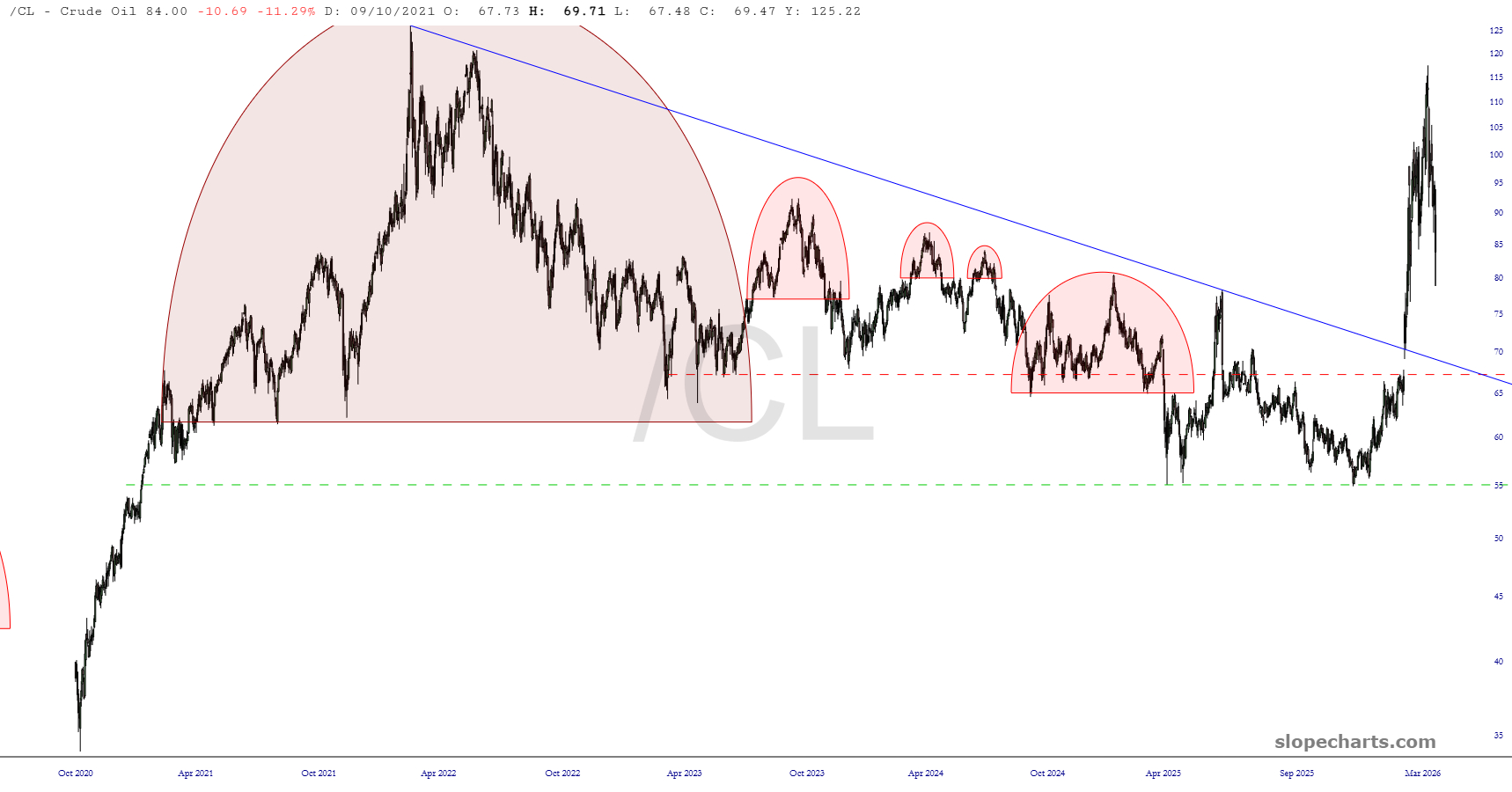
Crude oil, of course, has had a bit of a volatile time lately. For years, oil slowly diminished in price, looking like it was heading for a truly major break. Just about the time it was teasing that supporting horizontal line, VOOM, it exploded above its long-term descending trendline and doubled in price. Since then, it has shed a huge chunk of that price pop, although obviously unknown political realities will have an outsized effect on what happens next.
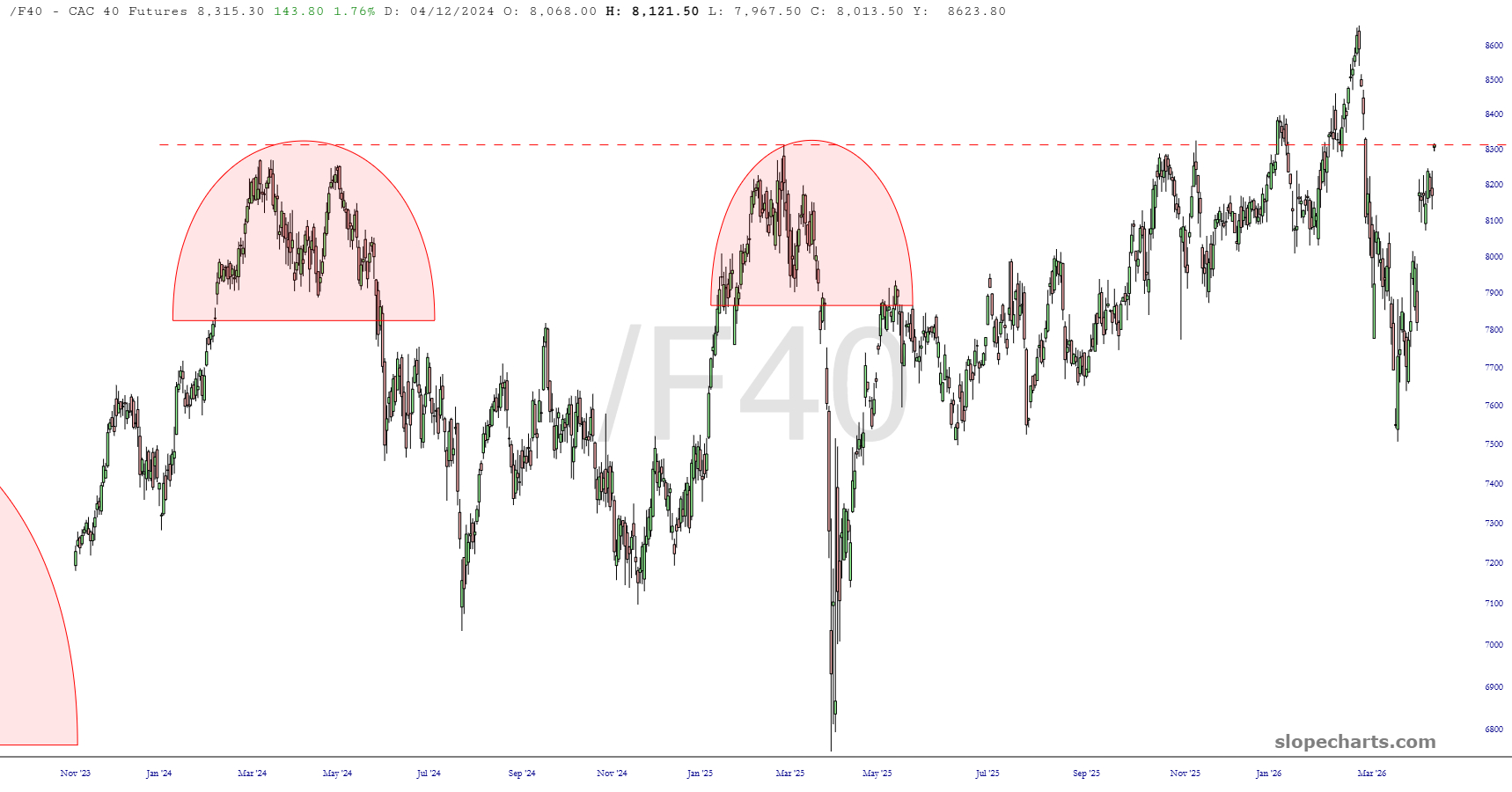
The French CAC-40 looks like it has shot its wad. I think that horizontal has once again represented a major point of price resistance.
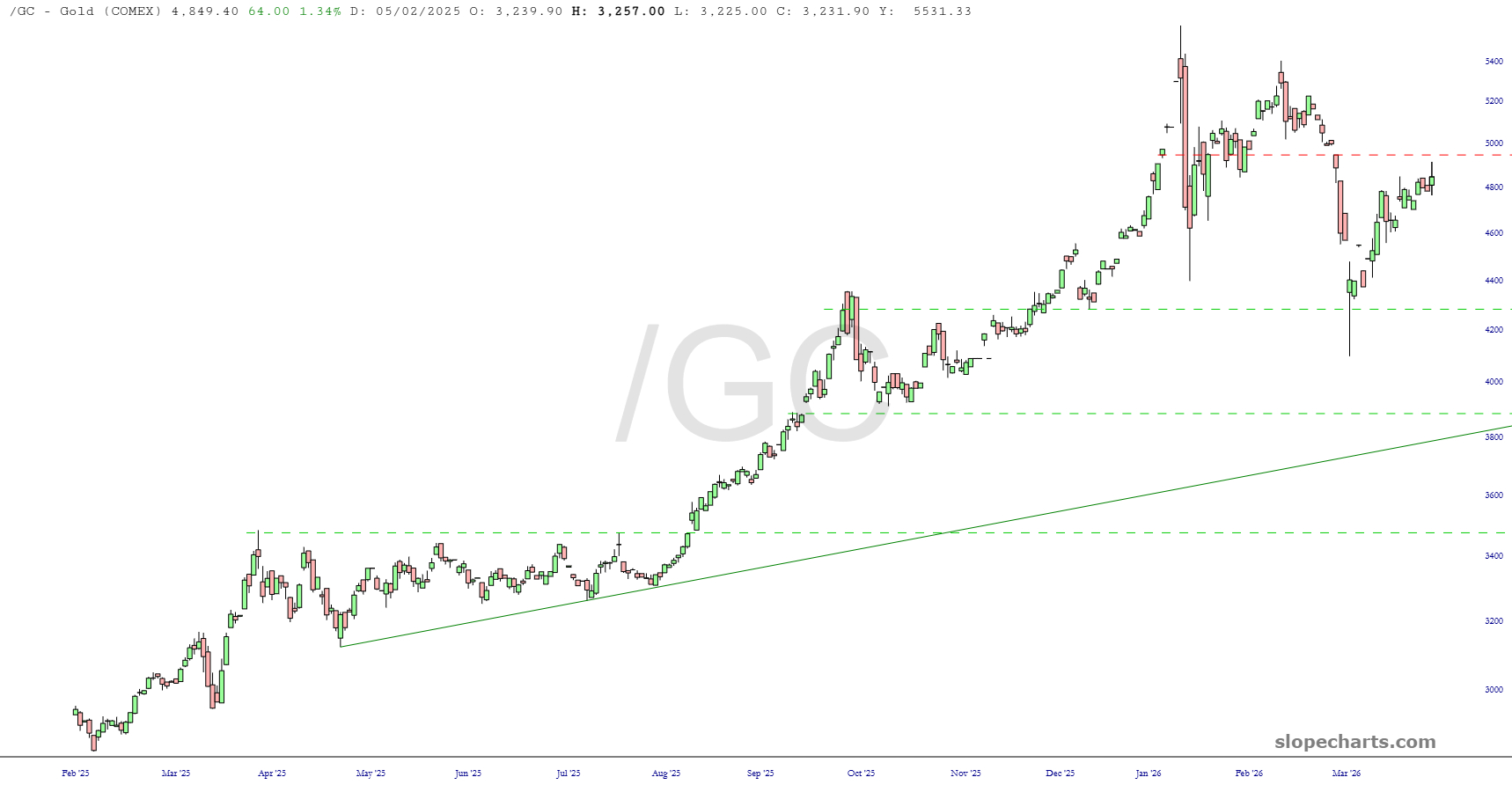
Gold was all the rage late last year and early this year, but the bloom has come off the rose of precious metals. I suspect this will continue for a while, and gold should weaken from here. I am short GDX, so I certainly am counting on it.
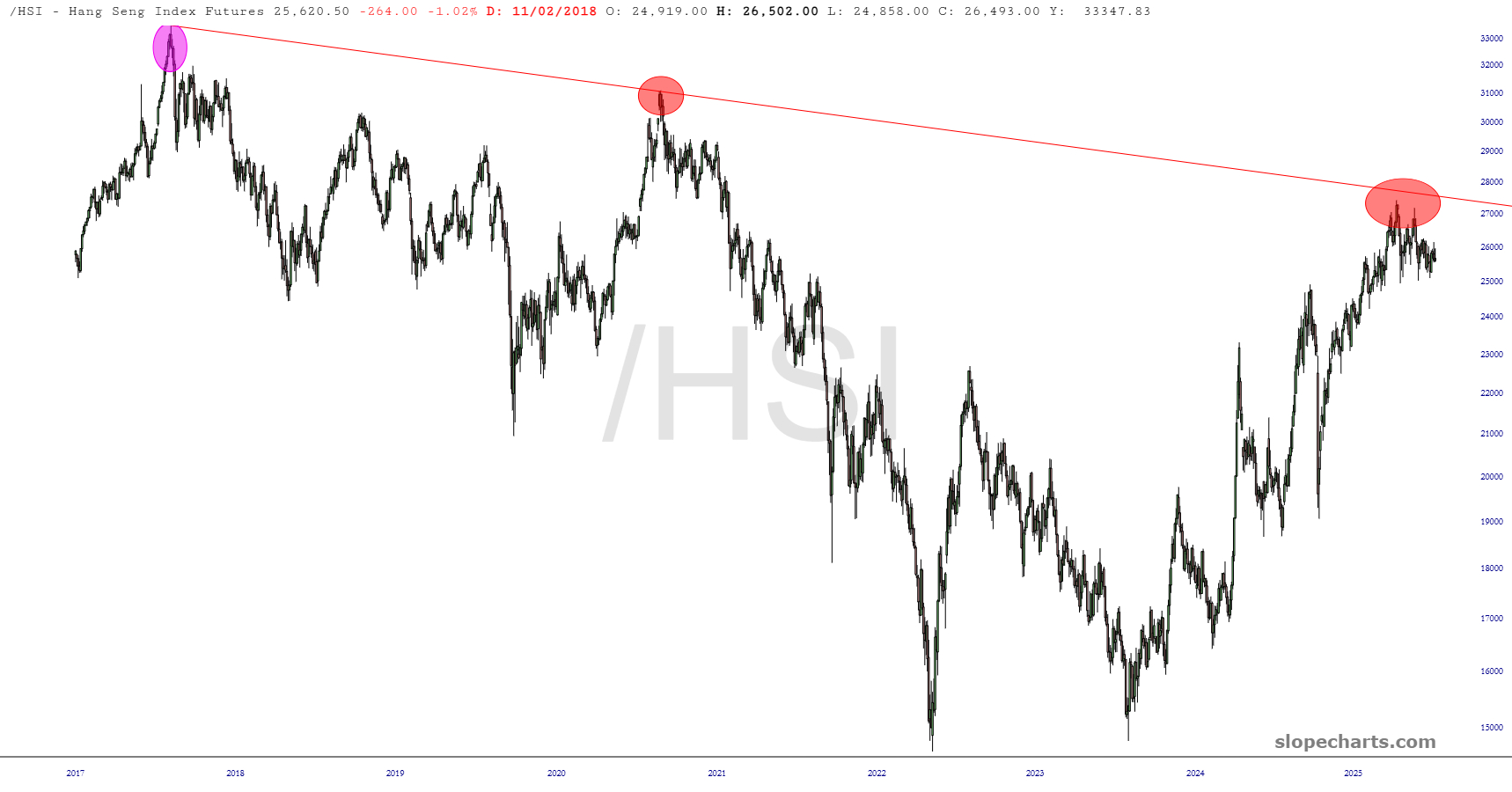
I am also short FXI, which aligns with the idea that the long-term direction of the Hang Seng will be lower from here. This is a very long-term trend.
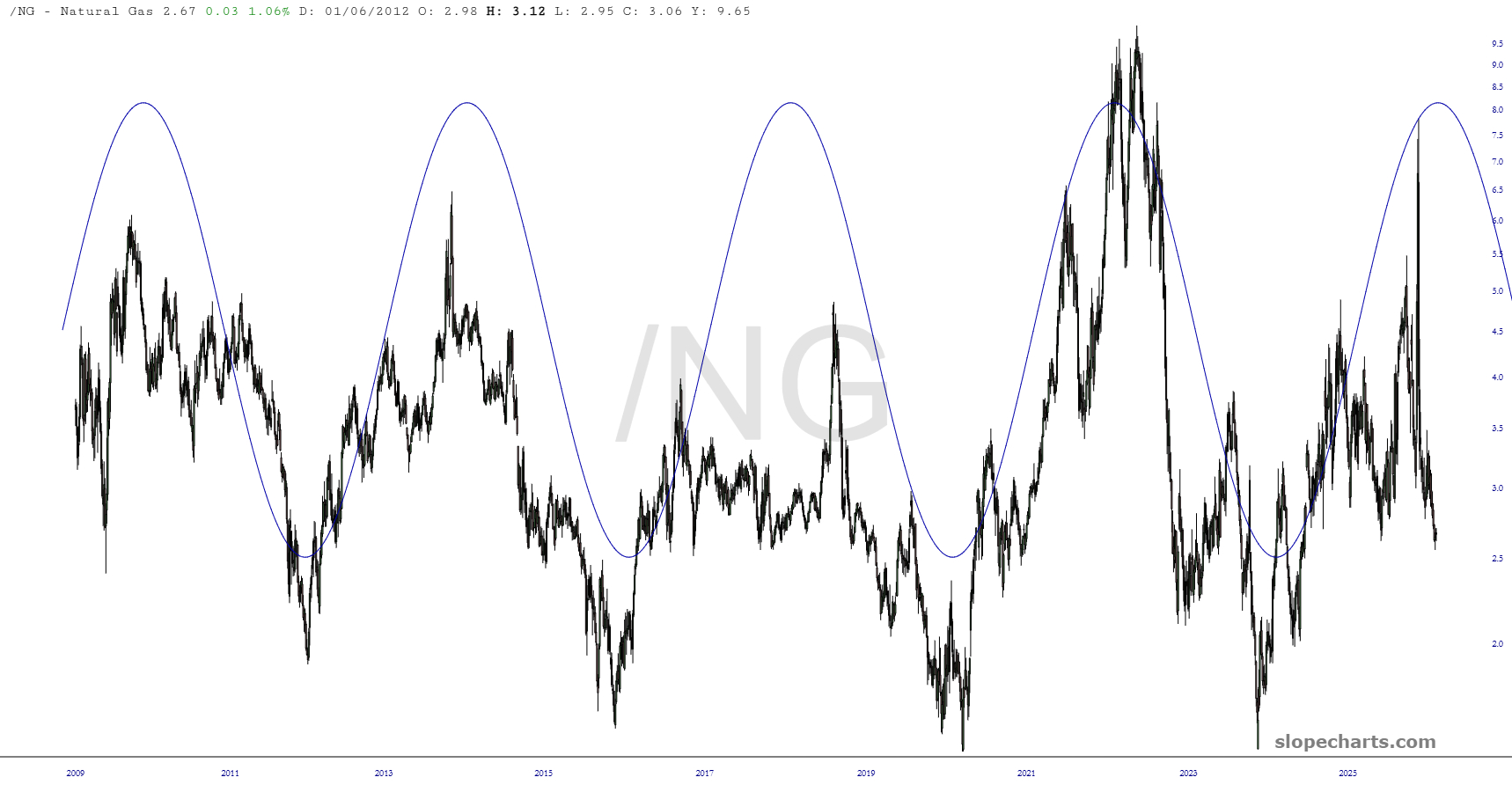
We haven’t looked at natural gas in a while, but I am once again absolutely amazed at how well this price action correlates with the sinewave. In all my decades of charting, this is the first time I’ve ever seen such a phenomenon.
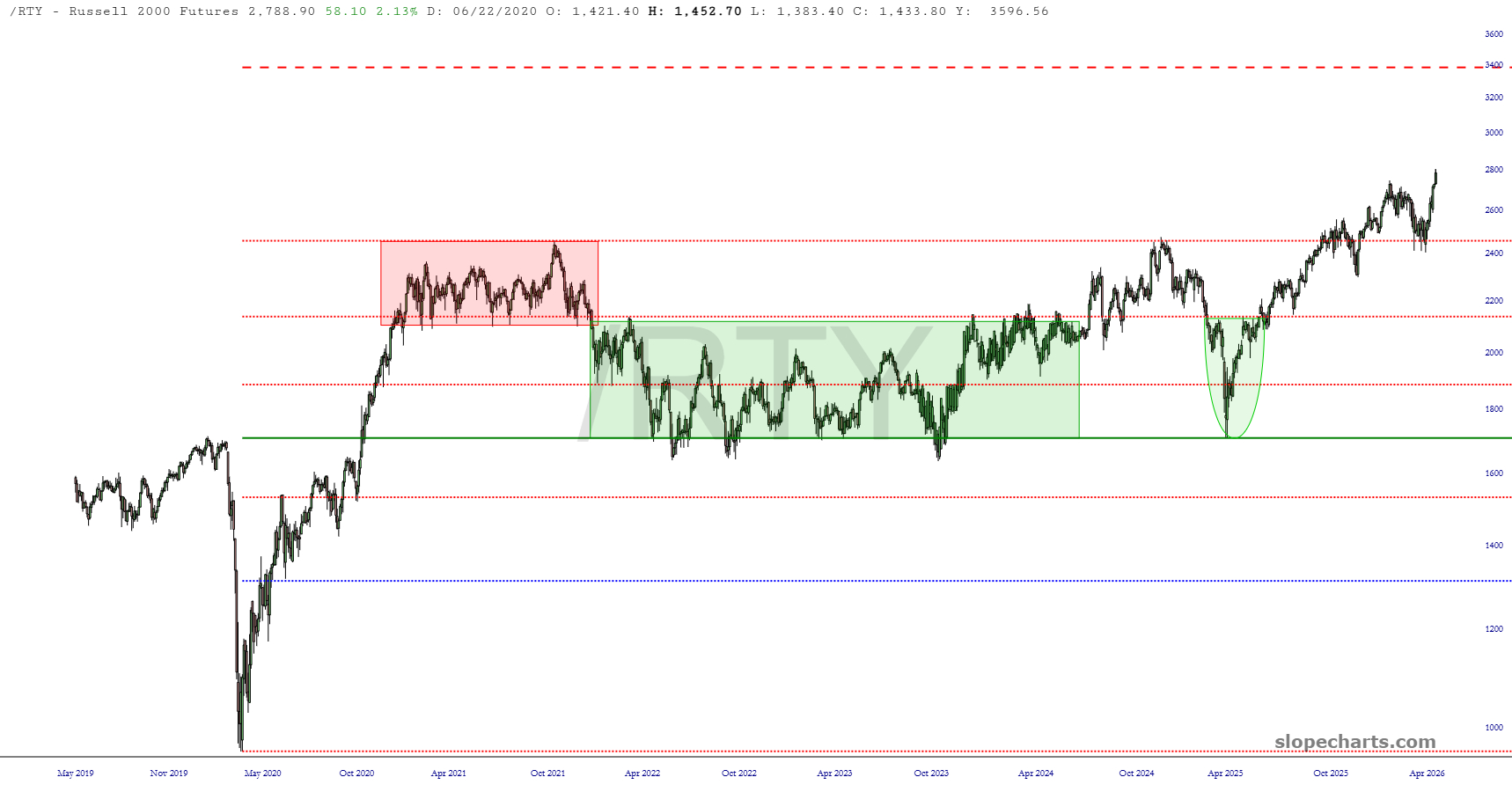
As for the Russell 2000, I’ve taken the liberty of stretching the upper boundary of the chart and showing the extended Fibonacci. Lord knows I would not like to see it get that high, but I thought I’d throw the bulls a bone and just illustrate one possibility.
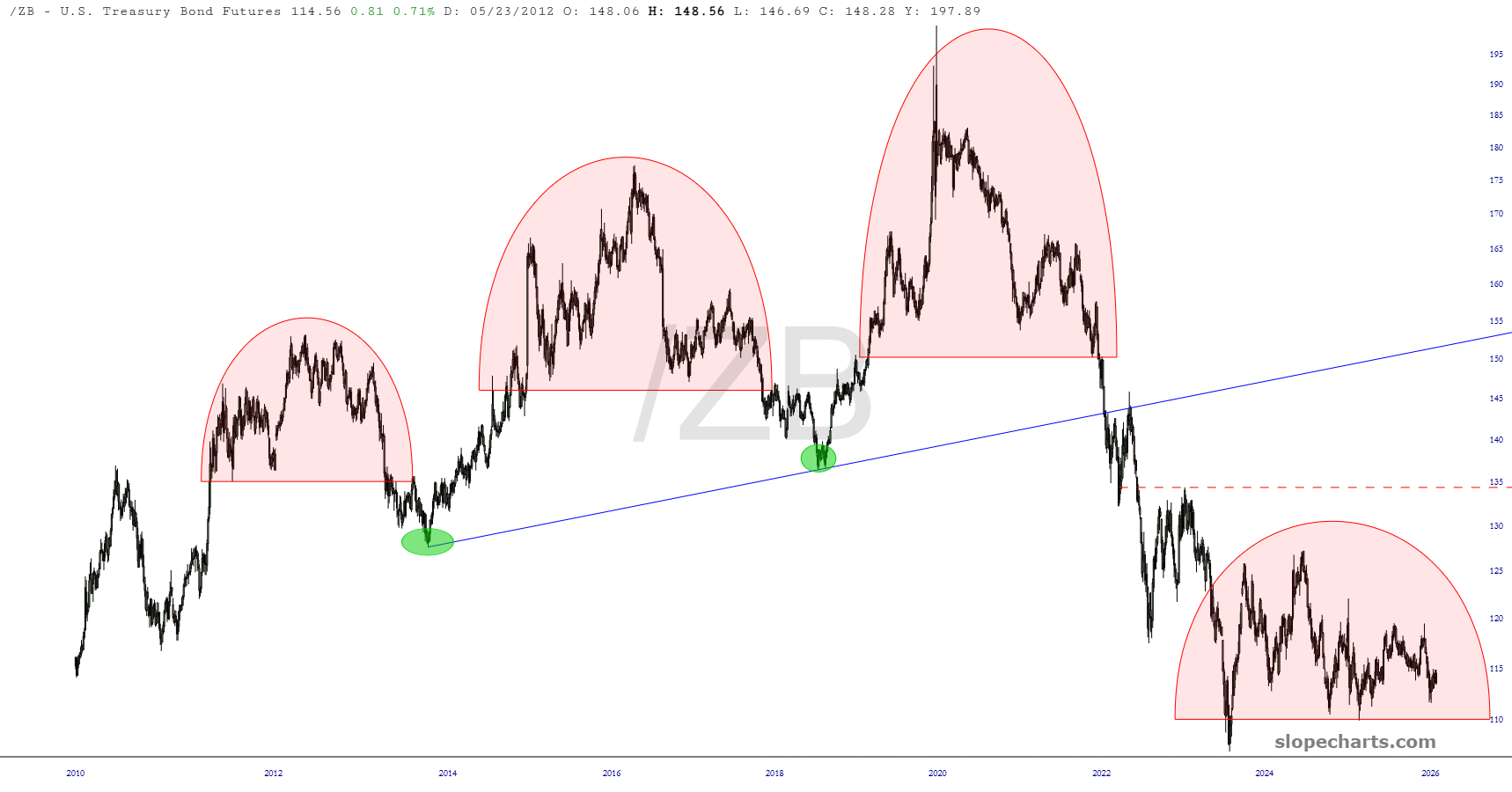
Finally, there is the bond market. I’ve got to say, if the price on this hammers its way down below that latest rounded top, it could be a huge screeching alarm with respect to the U.S. and where it is headed as a financial entity. Can you imagine the situation if interest rates marched steadily higher?