

Slope of Hope Blog Posts

Slope initially began as a blog, so this is where most of the website’s content resides. Here we have tens of thousands of posts dating back over a decade. These are listed in reverse chronological order. Click on any category icon below to see posts tagged with that particular subject, or click on a word in the category cloud on the right side of the screen for more specific choices.

Hertz Something for Nothing

By -

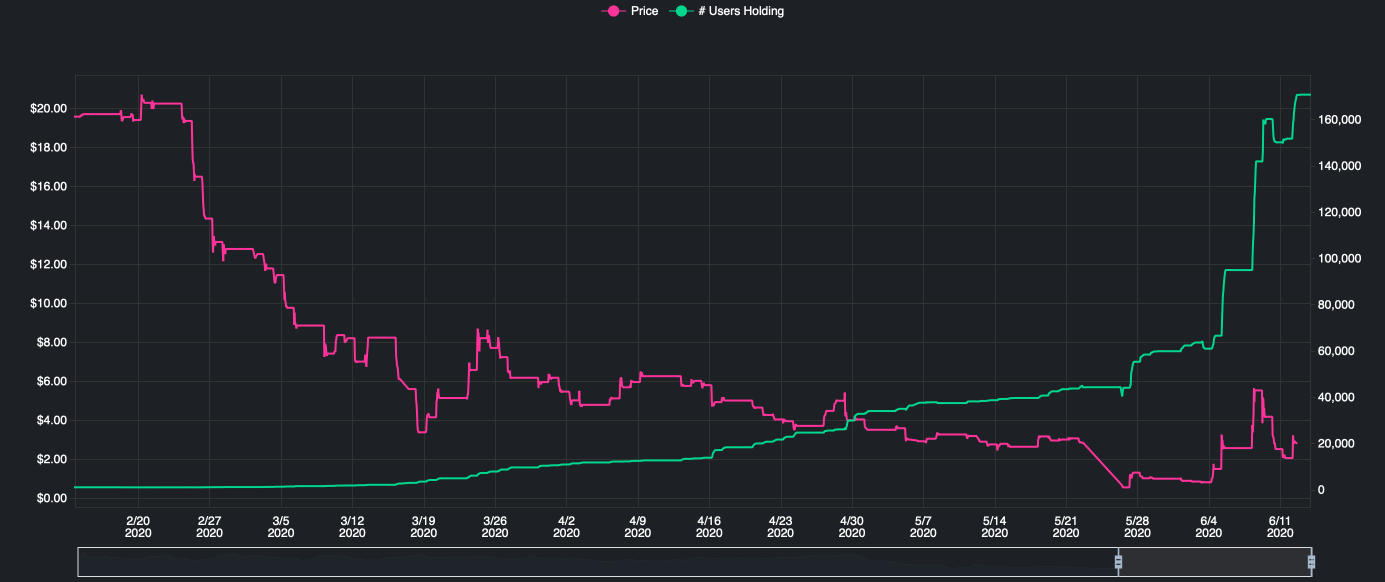
In the nearly four months since the Covid-19 outbreak reached the United States the market has experienced an historic crash and equally historic recovery.  Last week the S&P 500 closed within 5% of it’s pre-Covid-19 high and the NASDAQ reached a new all time high.  The market’s bounce has largely been driven by big tech, including stocks included in the Cornell Capital Group Quarantine Index which has dramatically outperformed the market.  While tech has outperformed, companies in the travel sector, many of which are included in the CCG Anti Quarantine Index, have largely missed out on much of the market recovery.  One member of the CCG Anti Quarantine Index, Hertz Car Rental, has filed for bankruptcy.  Typically, bankruptcy is the end of the line for equity investors but for Hertz Global Holdings Inc (NYSE:HTZ) bankruptcy was the beginning of new chapter in the Hertz story.

(more…)
Fannie Mae

By -

When Fannie Mae and Freddie Mac are released from conservatorship, they will hold an offering to allow investors to buy more stock. However, some believe that as the companies stand now, investors wouldn’t buy shares of the government-sponsored enterprises.

In a report dated Thursday, analyst Dick Bove of Odeon Capital explained what former Fannie Mae Chief Financial Officer Timothy Howard said about the GSEs’ business models on a conference call this week. Bove said he continues to question why anyone would buy Fannie Mae or Freddie Mac stock. He also wonders “who would become so enamored with these companies that they might place hundreds of billions of dollars into them.”

Bove and Howard argue that as things stand with Fannie’s and Freddie’s business models, it may not be able to make money in their stocks at this point. Bove said the answer to this question isn’t tied up to the lawsuits or whether the government will see things as investors see them.

(more…)

Euronav Underperformer

By -

The author may have a short position in Euronav

Euronav NV is the world’s largest listed tanker company. While the analysts’ bias is overwhelmingly positive we observe negative factors across its book and income-power components. We are agnostic on the tanker market however the company’s balance of risks deserves attention. 

Get the entire 10-part series on Seth Klarman in PDF. Save it to your desktop, read it on your tablet, or email to your colleagues.

(more…)

Electric Truck Delusions

By -

Big Market Delusion

It is often said that once you have a hammer, everything looks like a nail.  So be it with the big market delusion.  Since Aswath Damodaran and I published our article “The Big Market Delusion,” evidence of the delusion has been popping up everywhere – at least in my opinion.  The latest instance is the market for electric trucks.  In fact, this may be one of the best examples yet.

(more…)

Zoom and Delusion

By -

In an article published in the Financial Analyst Journal, Aswath Damodaran and I describe and analyze what we call “The Big Market Delusion.”

As we describe in that article, the peril of a big market, especially in its early stages, is that the entrepreneurs it attracts and the investors who provide funding are often so enthused about their prospects for dramatic growth, that they ignore fundamentals and price their companies with unrealistic expectations about the future.  Furthermore, we note that when the big market delusion is in force, entrepreneurs, managers, and investors generally downplay existing competition, thus failing to factor in the reality that growth will have to be shared with both existing and potential new entrants.  We also observed that the big market space tends to quickly become overcrowded, as too many companies get founded, with each thinking the odds of success are better than they actually are.

(more…)