
Slope of Hope Blog Posts

Slope initially began as a blog, so this is where most of the website’s content resides. Here we have tens of thousands of posts dating back over a decade. These are listed in reverse chronological order. Click on any category icon below to see posts tagged with that particular subject, or click on a word in the category cloud on the right side of the screen for more specific choices.

You Lucky, Lucky Bastiat

By -

I’m afraid my intellectual curiosity badly post-dated my time as a student. All the same, I’m trying to make the most of it now.

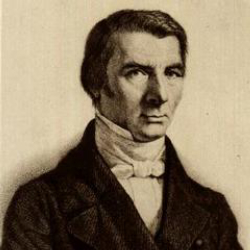
I stumbled across a quote of a 19th century French economic philosopher by the name of Frédéric Bastiat, and I dug up some tidbits of his I thought you might find edifying, especially these days. Because here’s the stone-cold simple fact I find galling: generations of the unborn of having their financial future mortgaged so that the rich people of today can stay rich (and get richer), thanks to the endless help of the Federal Government. Let’s drink in such timeless truths from Mr. Bastiat (and keep in mind, these insights were written 170 years ago!):

(more…)

Brilliance a Century Past

By -

One of my great pleasures each weekday is reading David Stockman’s Contra Corner, to which I am a cheerfully paying subscriber. In reading this evening’s edition, I was mightily impressed at a quote written by a man about whom I was unacquainted: Randolph Bourne. At the tender age of 30, Mr. Bourne was writing some extraordinary prose with respect to war and the nation-state. As the article declares:

He felt that with this great mix of cultures and people, America would be able to grow into a trans-national nation, which would have interconnecting cultural fibers with other countries. Bourne felt America would grow more as a country by broadening people’s views to include immigrants’ ways instead of conforming everyone to the melting-pot ideal. This broadening of people’s views would eventually lead to a nation where all who live in it are united, which would inevitably pull the country towards greatness. 

(more…)

Just a Taste

By -

For those of you who might have missed it last weekend, I announced that David Stockman’s Contra Corner was available for subscription by way of this link. To me, this is like catnip. I read it with relish every weekday evening. Here’s an excerpt from the most recent missive:

But at least back then, the Goldman Democrat in the White House, Secretary Hank Paulson, brought a semblance of competence and restraint to the dark business of pumping trillions of loot into the coffers of crony capitalist supplicants.

By contrast, this time we have a pathetic Goldman flunky, Steve Mnuchin, who is familiar with bailouts only because he got a $3 billion windfall from Uncle Sam last time around for taking virtually no risk during the pointless resurrection of a busted Savings and Loan called Indy Mac, which had absolutely no reason for existence.

Well, of course, he also helped Eddie Lampert load up the venerable Sears & Roebuck with crushing debts to fund massive self-serving share buybacks, thereby obliterating a chain of nearly 4,000 retail stores across America with $50 billion of sales in world’s record time.

Now—just one month after crowing about the stock market’s record high on February 19— this knucklehead has been put in charge of dispensing $1 trillion in Federal bailouts to a veritable soup line of corporate supplicants who have no one to blame but themselves for the alleged cash crunch now upon them.

Japanese Reflection (4 of 4)

By -

I’ve been pleasantly surprised that some of my most popular posts are excerpts from the only history book I ever wrote, Panic, Prosperity, and Progress. Over this holiday weekend, I’ll be sharing, over the course of four days, the chapter dedicated to the inflation and bursting of the Japanese bubble of the 1980s. I think you’ll find some interesting parallels with China. You can read the first part here, part two is here, and part three is here.

Equities in Japan peaked on the last trading day of the year in 1989. The Nikkei ended the year with a crescendo, and the majority of market observers agreed that the market was not overvalued. There was no reason they should not have expected 1990 to bring in more profits, since the trend has been so strong, so persistent, and so long-lived.

(more…)