


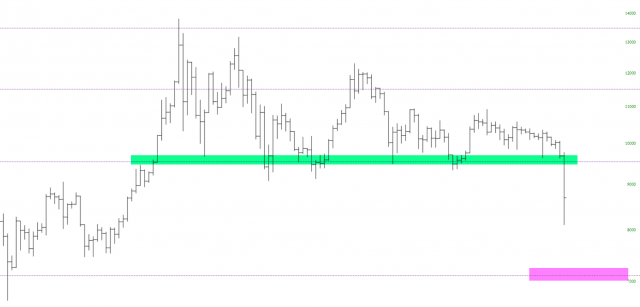
I haven’t kept a secret of my view that, should the Bitcoin Fibonacci support be breached, we were heading back toward the $7,000s. Indeed, I mentioned it just yesterday on my tastytrade show. And here we are!

Slope initially began as a blog, so this is where most of the website’s content resides. Here we have tens of thousands of posts dating back over a decade. These are listed in reverse chronological order. Click on any category icon below to see posts tagged with that particular subject, or click on a word in the category cloud on the right side of the screen for more specific choices.
I haven’t kept a secret of my view that, should the Bitcoin Fibonacci support be breached, we were heading back toward the $7,000s. Indeed, I mentioned it just yesterday on my tastytrade show. And here we are!
Based on purely technical reasons, which I’ll explain below, I’d hazard a guess that US bonds are not in a bubble. If anything, equities look more like their bubble is about to burst.
The price on the following monthly charts of US 2-yr, 5-yr, 10-yr, and 30-yr bonds is currently trading around their respective regression channel medians, after a lengthy move up over the past year off very oversold lows (around the channel -2 deviation level).
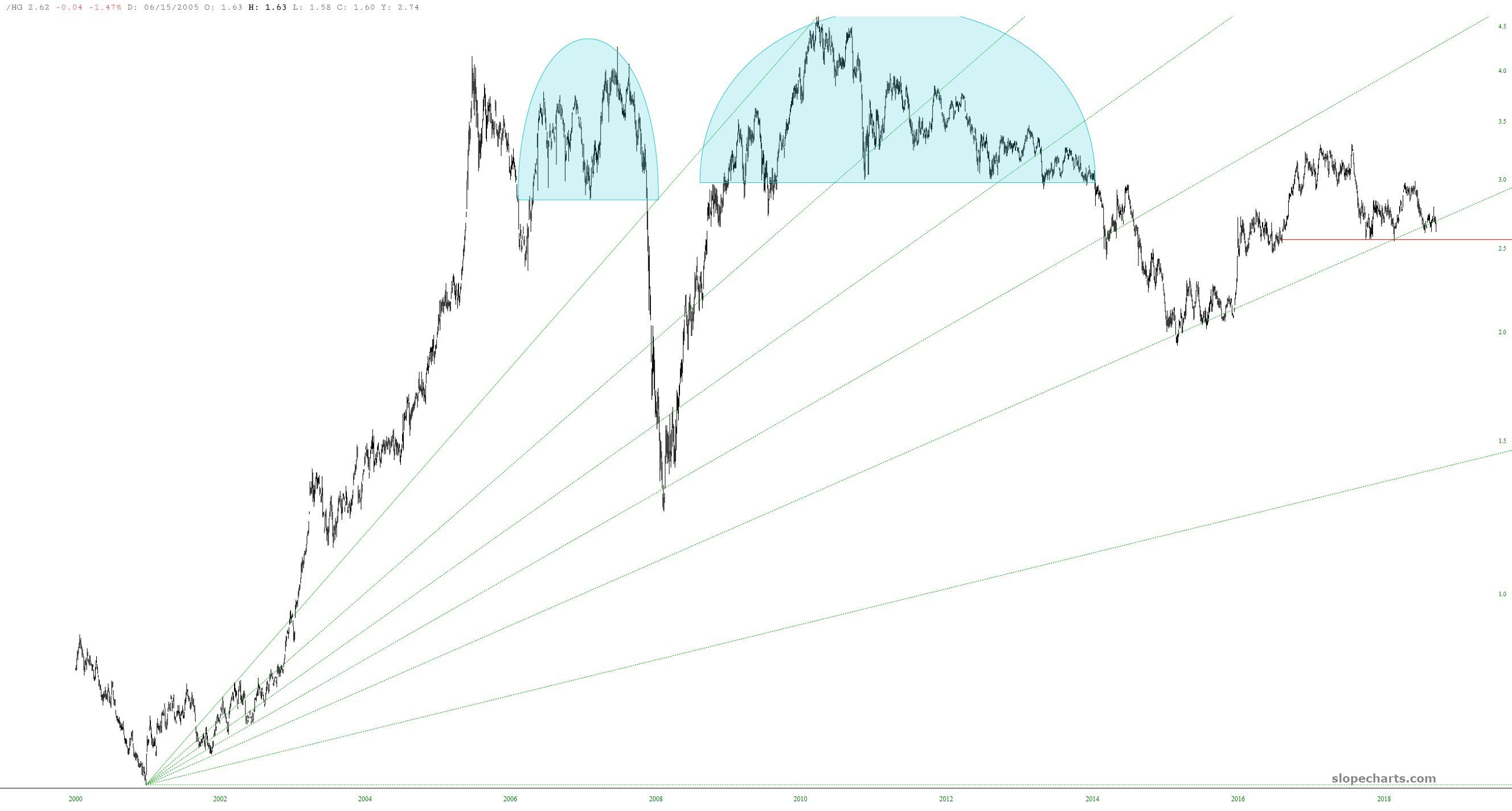
(more…)Much has been made recently about copper’s decline in value. The fabled “Doc Copper” is supposed to be a harbinger of economic direction. I’m not so sure, but I will say that the continuous contract of the metal is fascinating, particularly because it’s one of the very few instances in which a Fibonacci fanline seems to be instructive about key levels of support and resistance.
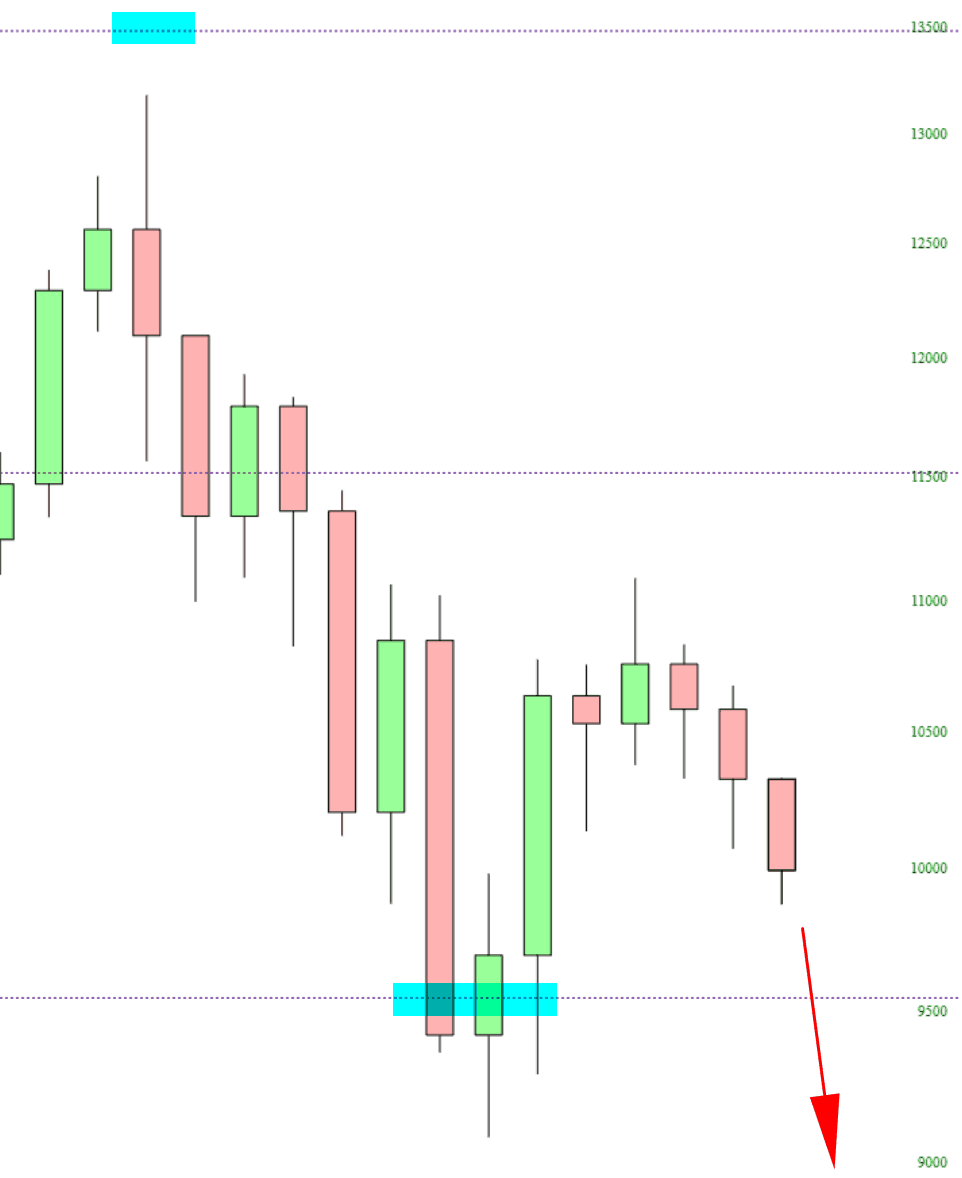
I’d say the thrills about crypto are once again diminishing, and it’s no surprise. The explosion on Bitcoin from $3.5k to $14k is really unraveling.
Most of you have probably heard about how copper is a good leading indicator of how the economy is going. So much so that it is referred to as “Doctor Copper”. As Investopedia puts it:
(more…)The term Doctor Copper is market lingo for the base metal that is reputed to have a Ph.D. in economics because of its ability to predict turning points in the global economy. Because of copper’s widespread applications in most sectors of the economy — from homes and factories to electronics and power generation and transmission — demand for copper is often viewed as a reliable leading indicator of economic health.
