
Slope of Hope Blog Posts

Slope initially began as a blog, so this is where most of the website’s content resides. Here we have tens of thousands of posts dating back over a decade. These are listed in reverse chronological order. Click on any category icon below to see posts tagged with that particular subject, or click on a word in the category cloud on the right side of the screen for more specific choices.

Valuing Exxon ADAM

By -

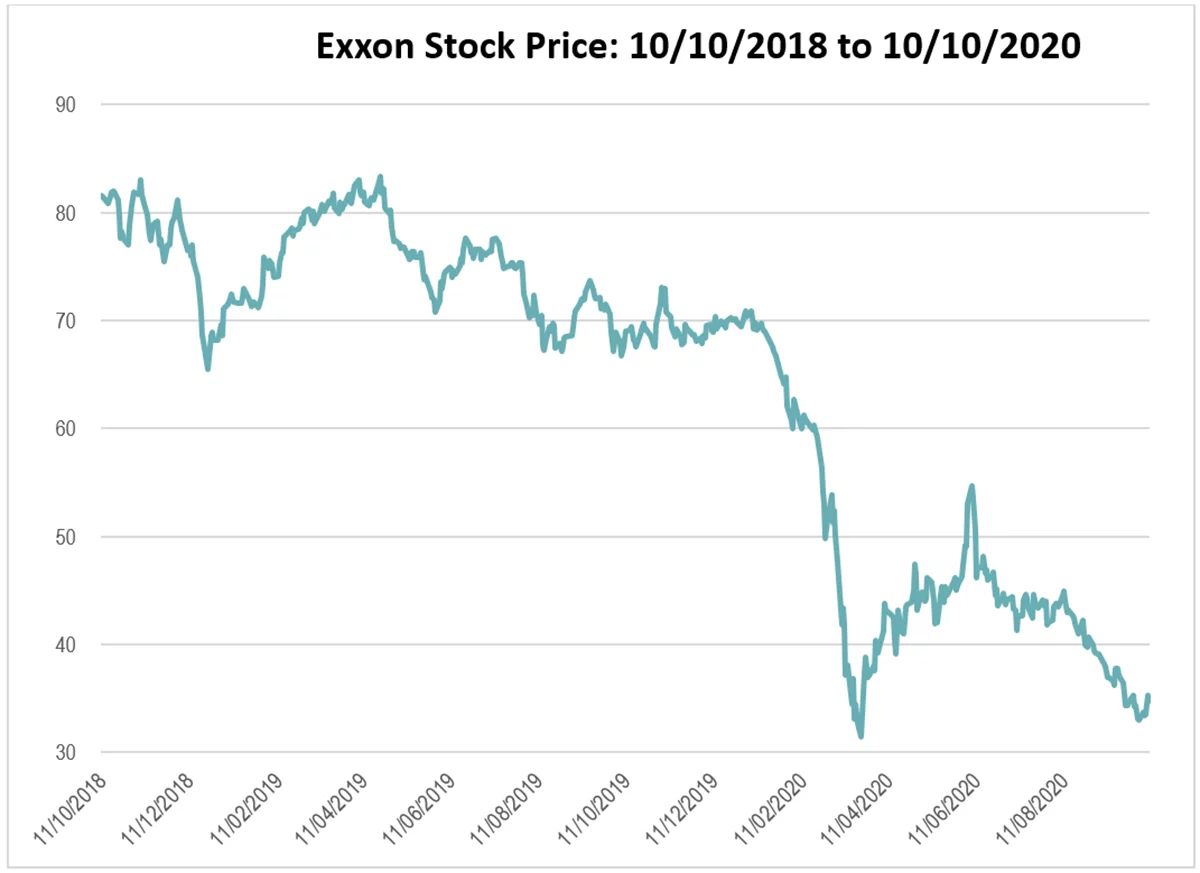
Most stock valuation chatter on the internet focuses on companies with great growth opportunities like Zoom, Wayfair and Peloton or well known companies whose stocks have outperformed like Apple and Amazon. Here we take a look at the other side of the coin and present a valuation of Exxon Mobil Corporation (NYSE:XOM). Needless to say, the past few years have not been happy ones for Exxon. Plunging oil prices, caused by a combination of Covid, a growing worldwide recognition of the need to transition to sustainable energy, and a variety of other headwinds have caused Exxon’s stock price (charted below) to drop from a high of $83.38 to a recent low below $33.00.

Exxon Valuation
(more…)

The Election & Fannie Mae

By -

Some have argued that if President Donald Trump loses the election, Fannie Mae and Freddie Mac will be left in conservatorship instead of recapitalized and released. However, Tim Pagliara of CapWealth Advisors has argued that even if Joe Biden wins the election, he believes the government-sponsored enterprises will still be released.

Now it seems analyst Dick Bove of Odeon Capital agrees with him, although he disagreed before. He said in a recent report that regardless of election’s results, the winner needs the housing market to be strong, and that requires Fannie Mae and Freddie Mac to be in good shape.

(more…)

How To Get To Half a Trillion

By -

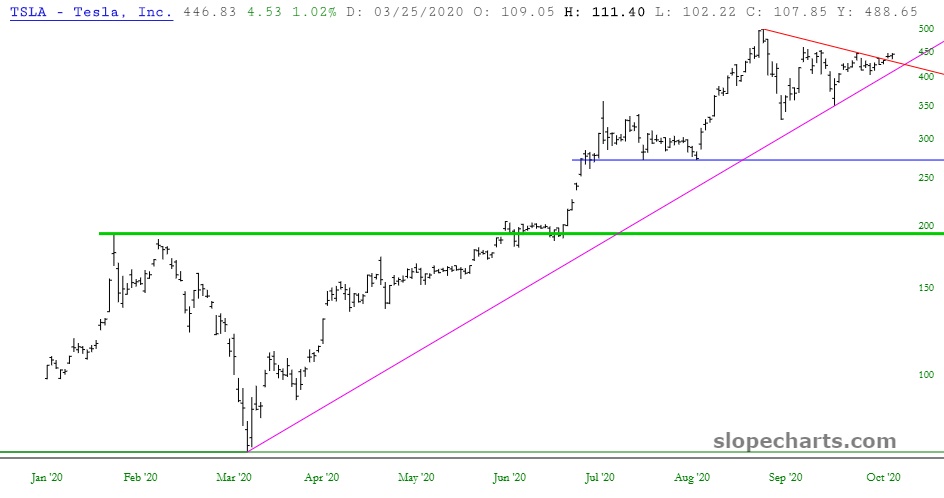
​On August 31st Tesla‘s latest bull run ended when the stock closed at an all-time of $498.50 per share. At that price, the market cap value of Tesla was $464 billion, an amount greater than Ford, GM, Daimler, Volkswagen, and former number one Toyota put together. With Tesla approaching $500 billion, a level reached by only a handful of companies most notably today’s tech giants, Apple, Amazon, Google, Facebook, and Microsoft, we at Cornell Capital Group thought it would be a good time to examine what is required to be a $500 billion market cap company. Before investors conclude that Tesla is a $500 billion company, they should consider what the tech giants looked like when they reached that level.

The Tesla/Apple Comparison

The most common justification for Tesla’s high valuation is the “Tesla is a tech company, not a car company” story. A key element of that story is the Tesla/Apple comparison, a favorite amongst Tesla bulls, who point to the size of the global cell phone market before the iPhone as evidence of Tesla’s massive growth potential. In the Tesla/Apple analogy, legacy auto companies play the part of Nokia, Blackberry and Motorola while Tesla is the iPhone maker. Extending the analogy further, Tesla’s Model 3, like the iPhone, is supposed to be the product that redefines the industry by convincing car buyers to pay more for a technologically advanced car in the same way Apple took what appeared to be an expensive niche item and gave it mass market appeal.

(more…)

Why Day Traders Fail

By -

Day trading is when an investor buys and sells the same stock on the same day, which can occur in any marketplace (but is particularly common in the foreign exchange and stock market). Over 97 percent of daily trading activity derives from individual investor accounts. Moreover, performance measured over six months found that eight out of ten-day traders loses money. While those numbers can be discouraging, it should serve as a measure of caution for new traders lured into this activity from marketers advertising “fool-proof strategies” and “surefire signals.”

In a 2011 research study titled “The Behavior of Individual Investors,” UC Berkeley Professors Brad M. Barner and Terrance Odean found that individual investors who trade both actively and speculatively without a diversified portfolio lost money over time.

(more…)