

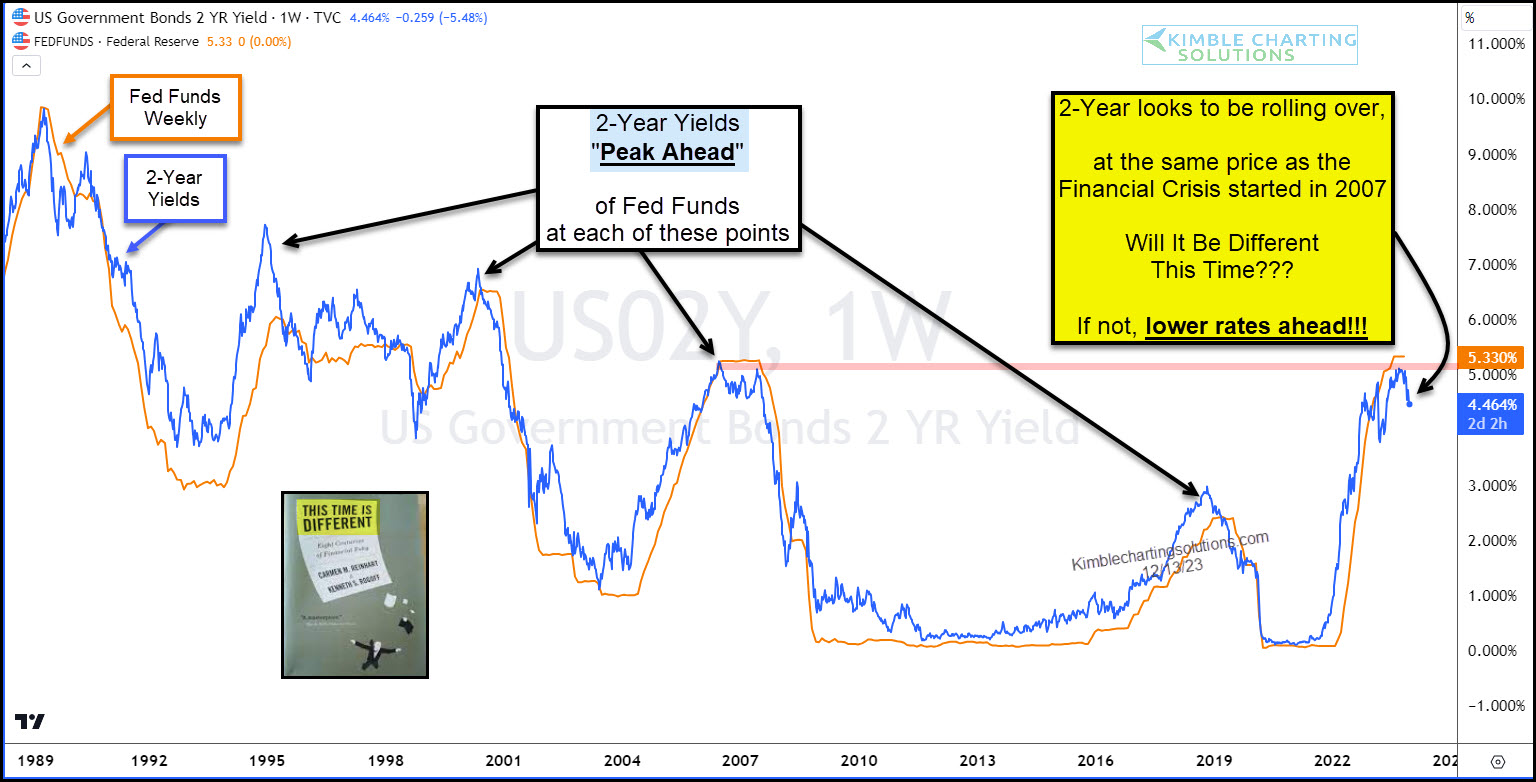
From our friends at Kimble Charting:

Slope initially began as a blog, so this is where most of the website’s content resides. Here we have tens of thousands of posts dating back over a decade. These are listed in reverse chronological order. Click on any category icon below to see posts tagged with that particular subject, or click on a word in the category cloud on the right side of the screen for more specific choices.
From our friends at Kimble Charting:
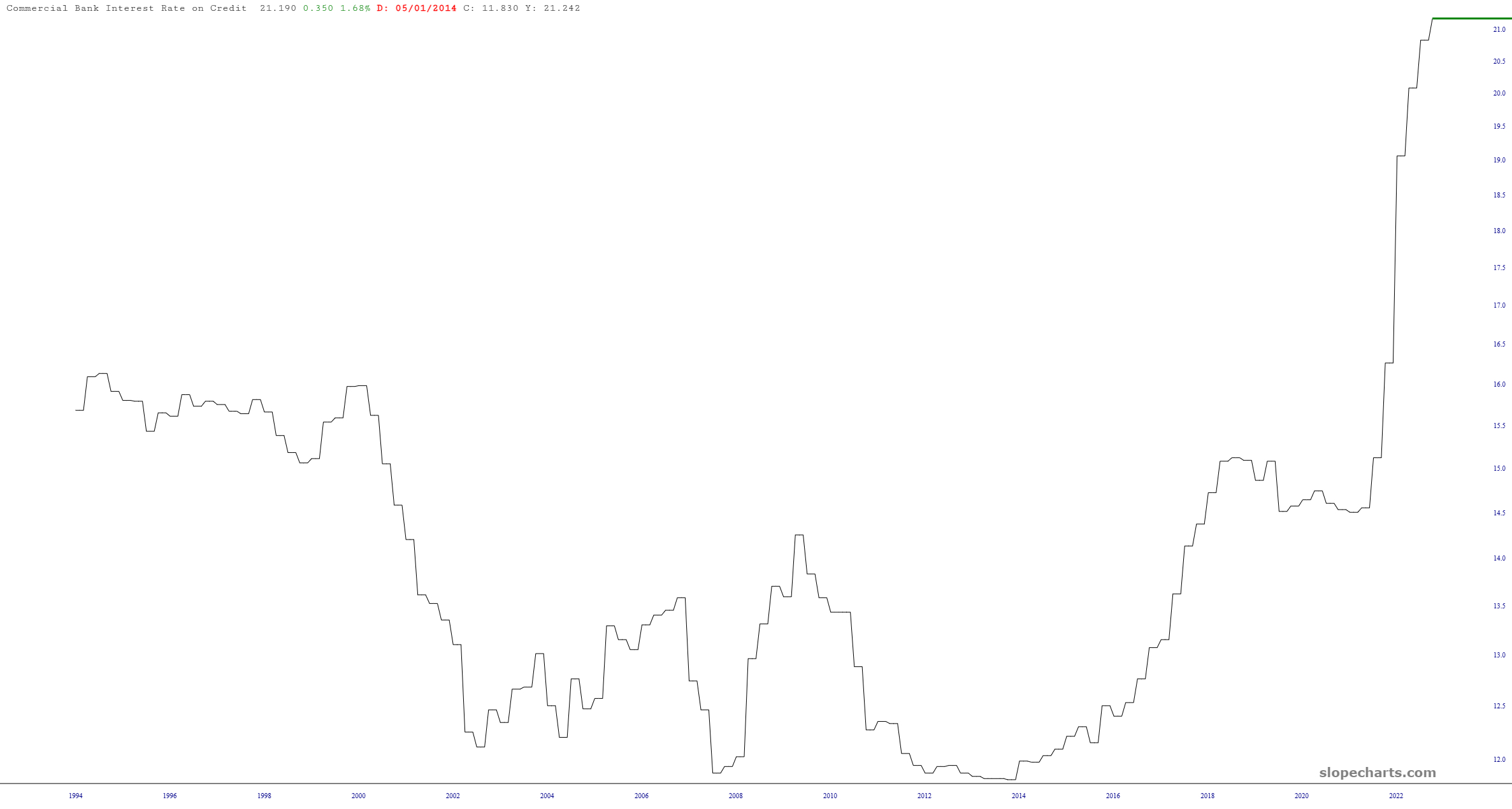
I was messing around with our Economic Database (yeah, honestly, that’s what I do at night) and happened to find one data set of the credit card rates banks charge to consumers. This is……..shocking. Considering how the government has literally gone into debt by TRILLIONS to support this parasitic industry, you’d think maybe banks wouldn’t be completely shafting consumers. But, nope! These are loan shark rates.
At some point, perhaps soon, the Fed is going to start reducing interest rates. The assumption is that, once that starts, it’s going to be party time for stocks (as if 2023 wasn’t a party enough). That’s true sometimes, but it turns out that it is utterly dependent on whether we enter a recession or not. As the chart below suggests, stocks do tend to go up once Fed starts cutting (upper-right portion of the chart below), but in instances in which the economy is entering a recession, the stock market not only falls, but it falls a lot more than it rises otherwise.

The principal driver behind soaring equity prices the past six weeks has been the counter-trend rally in bonds. This week, it looks like bonds may have peaked under a key resistance level. Specifically, there was a price gap on the TLT at 96.66 which was approached but not pierced, and TLT starting to weaken afterwards (in spite of equities still soaring).

Probably the most compelling chart I’ve seen for the argument that rates have peaked and are heading much lower.