
Some people, I suppose, consider the sort of person they would like to be. I, on the other hand, tend to think about what sort of person I do not want to be. The trouble is, I have been each of those people at some point in my lifetime. I wanted to share some thoughts about three of these anti-aspirational targets. I do this, oddly, in the context of thinking about everyone’s favorite obsession these days, which is of course AI.
Escalator Man
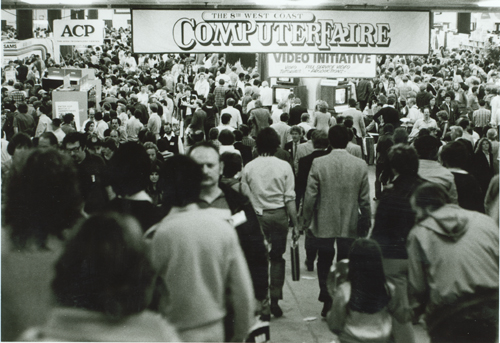
The year is 1982, and young Tim is in San Francisco by himself, excitedly heading into the giant underground convention space known as Brooks Hall. This was years before such niceties as Moscone Center existed, and the West Coast Computer Faire was still quite young, as was I.
I remember like it was yesterday heading down the escalator, eager to pick up every brochure and giveaway I could lay my hands on. In front of me were a couple of adults, apparently from the normal working world of San Francisco (as opposed to student Tim). One of them said to the other something along the lines of “This is all very interesting, but these things are toys.”
For some reason, this bugged the hell out of me. I suppose part of my visceral reaction was that personal computers were my world, and for this 30-something dude to be disparaging my beloved microcomputing world struck me as a direct insult. The fact that, over forty years later, I can still remember this so vividly indicates just what a strong reaction I had to his utterance. I thought to myself something like “You don’t know what you’re talking about, you old fart.” Yeah, a guy in his 30s seemed really old to me at the time.

In the present day, as a person well past my 30s, I know I don’t want to be “that guy“. In other words, I don’t want to be the guy who is so entrenched in his own worldview and technology that he can’t see some sea-change that’s right at his feet. This guy was clearly clueless, and I was way ahead of him, but at least he deigned to visit the Faire to see what all the kids were talking about.
Whenever I eschew some particular widely-touted innovation, I check myself, because the memory of that guy is always with me. I didn’t respect him, or at least his opinion, and I’d rather not hold myself in contempt as well.
The Browser Virgin
Now the year is 1993, and I’m one year into the creation of my company, Prophet. We have built the business up to a point where we can afford a nice little office, and my former boss is actually renting a spare room from us while he puts together his own tiny startup (Quote.com, which he sold to Lycos for something like $80 million).
Chris calls me and my partner into his one-room office since he wants to show us something. On his screen is a picture of a beach in Hawaii, and he explains to us that he’s looking at it via a thing called the Internet on something called a browser. I politely said thank you, walked out of his office, and didn’t give it a second thought.
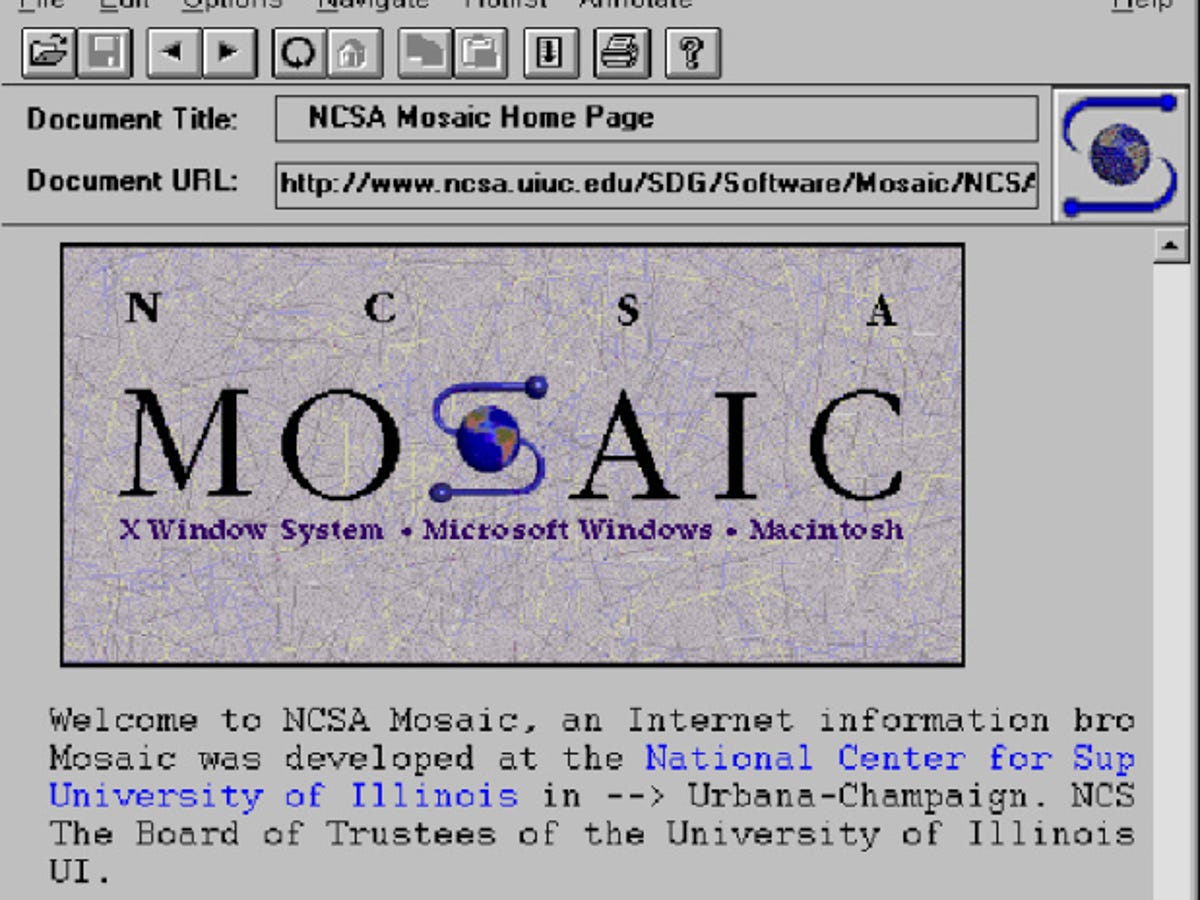
Now keep a few things in mind. I had been using personal computers, at that point, for 14 years already. I wrote an entire book about computer communications in the year 1982. I was, in 1993, trying to sell historical financial data via modem to traders. You would think that, with all those parameters, I would have been bouncing off the walls with excitement and curiosity when I was shown this new thing. But, nope, I didn’t get it. Not even a little bit.
Believe me, that haunts me to this day. It made me think, in retrospect, I wouldn’t know a revolution if it was staring me right in the face, which it absolutely was at that time. Maybe that’s a key reason Chris went on to sell his little startup for $80 million and I sold mine for $8 million. So I don’t want to be that guy, either. The problem is, I was that guy.
NFT Mogul
Finally, we are in the year 2021. I’m sick of missing out, and the Covid-crazed market is exploding to ungodly highs, while everyone with a brokerage account is making bank. Bitcoin is approaching $70,000. I’m at a breaking point.
Thus, I throw my hat into the NFT ring. I buy a great domain (ticker.art) with the idea of creating images based on ticker symbols. I hire a bright young artist to create the original art for me, and I learn everything I can so that I can build the website and the infrastructure to sell these things.
Truth to tell, we actually sold every piece I created (there were sixty-four creations), and to this day I’m pretty proud of my efforts. I made a moderate but respectable hunk of cash for all my work, and I had a ball doing it, so I don’t consider it a waste of time or effort.
But the fact is that the only reason I pursued this is because I thought I was somehow missing out on a really big thing, when in fact NFTs were about the stupidest thing ever conceived in the history of mankind. Just plain idiotic. And it’s no surprise that NFTs were the final peak of the crypto craze (which itself was beyond stupid). I’m simply embarrassed to have jumped in at the tippity-top of the whole thing, and by way of the stupidest aspect of all things crypto. Indeed, ticker.art rolled out almost to the millisecond that the entire crypto space hit its zenith, and I’m highly confident we’ll never see those prices again.
Profit Addicts
In my estimation, the public has been slowly and carefully trained to become profit (and gambling) addicts. With every passing year since 1987, the government has shown, time and again, their willingness to hurl trillions of fiat-bux into the market in order to keep things propped up. They know the voting public won’t tolerate anything less, which is precisely why we’re $32 trillion in debt now.
Adjunct to this is a cooperative Silicon Valley, which is always striving to find The Next Big Thing to justify the sky-high valuations. Recent examples include:
- 3D printing;
- CRISPR gene-editing technology;
- Hydrogen-powered vehicles;
- Crypto;
- NFTs;
- And the biggest, most ridiculous one yet, AI
I have no doubt AI is going to be a world-changing deal over the next couple of decades. I suspect life will be nearly unrecognizable once it has penetrated into our society. At the same time, having dabbled in some AI during this crazy, I am not at all convinced it’s going to be the panacea everyone is making it out to be. More than that, if the great promise of AI is that it’s going to throw 300 million people out of work, I’m not sure what all the excitement is about.
I think these thoughts, and write these things, wary of being one of the buffoons I’ve mentioned above, which are various guises I’ve undertaken in earlier parts of my life. Maybe I’m dead wrong. But, in my opinion, the last genuine “revolution” we had of any merit was the introduction of the iPhone in 2007, and none of the hype, bluster, and valuations since then have been anything more than hoo-ha.