

For my entire adult life, I’ve heard about how overpriced Bay Area real estate is, and how one could get a place that was SO much bigger with SO much more land for the same price in Bumblefuck, Oklahoma instead of Palo Alto. That’s always been true, but the fact is that I’ve done better with real estate (by a country mile, even by Bumblefuck metrics) than anything else, and real estate around here seems to do nothing but go up.
Having said that, I must draw your attention to an ad in our local paper I just saw:

Now, the fact that this place is selling for $36,999,000 isn’t the interesting part (although, let’s face it, at $37,000,000 it would simply be too much). What’s interesting is in the text of the ad. Specifically:
- “AI is……..creating new waves of wealth“: which shows they are deliberately marketing this to folks that have been made zillionaires by the likes of NVDA;
- “Seize the moment before the market catches up“: which implies that for some reason $36,999,000 is a steal and, once those other schmucks wake up, they’re going to realize what a bar-goon you just acquired.
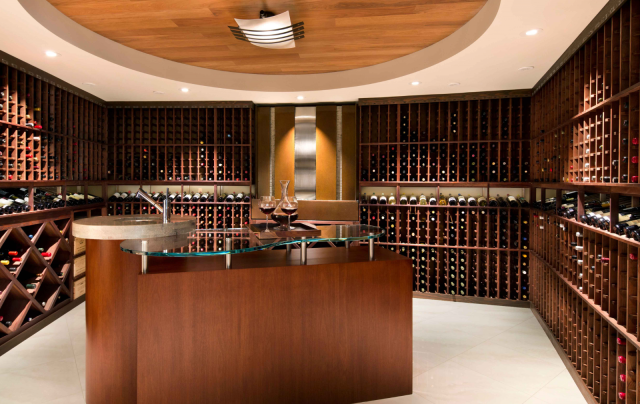
Feel free to thumb through the dozens of professional photographs in the site mentioned above. Lord knows none of us can live without a wine room that looks like the one shown here. I’m confident whoever buys this place will use this right room upwards of seventy to eighty minutes during their occupancy of the property.
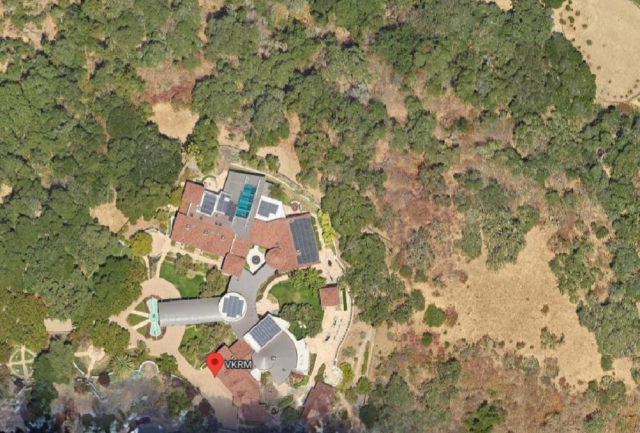
Make no mistake, a house this grand on such a large piece of land is a true rarity, which is why it’s so danged pricey.
I would point out, however, that one vivid recollection I have of real estate reaching sky-high prices was around 1990, when the elite of Japan were gobbling up property left and right.
Once their bubble burst, they found that there just aren’t that many people who were willing to buy their $40 million palace. In other words, if a normal person buys a property at $500,000, and hard times hit, they may face the fact that the market price of their property has dropped to $450,000. I had that exact situation happen to me when I bought my home for $542,500 in 1992 and watched it sink in value to $480,000. I felt lousy at the time, but let’s just say it all worked out anyway.
The person plutocrat buying a $40 million property in 1990 will not, however, see it sink to $39,500,000. Instead, he might be flabbergasted to discover the highest price is, let’s say, $15 million, or even $10 million. These “bidless” markets become a reality when bubbles burst, and the worst percentage wipeouts are experienced by those who paid stratospheric prices for their properties. There are only so many elites out there to be consumers of such places.
My point is that the market will indeed “catch up” sooner or later, but probably not in the way the advertisement is implying.
