

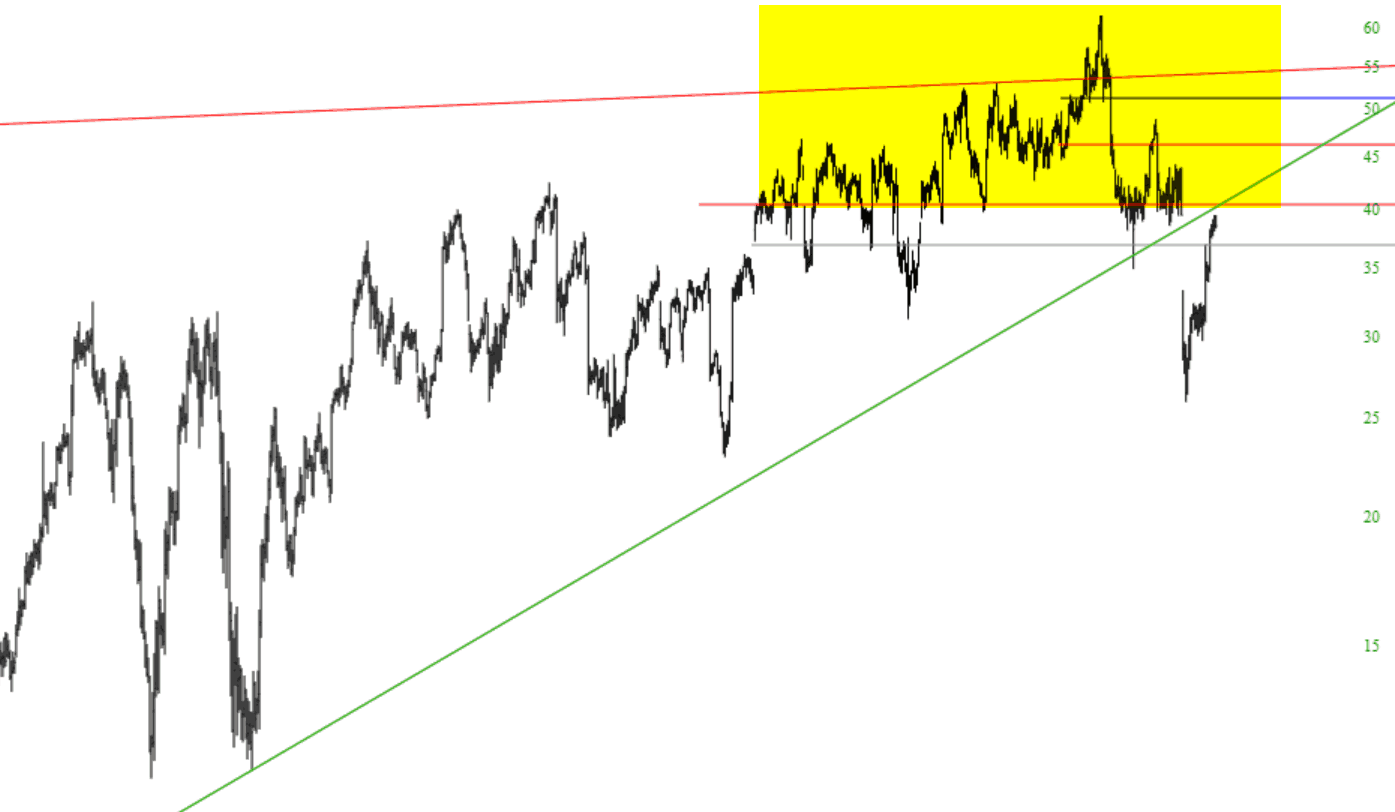
Welcome back from the holiday, Easter Worshipers. I wanted to share a couple of shorts with you among my 50 holdings. The first is Big Lots (symbol BIG), which broke its long-term trendline a while ago and retraced to its topping pattern.

Slope initially began as a blog, so this is where most of the website’s content resides. Here we have tens of thousands of posts dating back over a decade. These are listed in reverse chronological order. Click on any category icon below to see posts tagged with that particular subject, or click on a word in the category cloud on the right side of the screen for more specific choices.
Welcome back from the holiday, Easter Worshipers. I wanted to share a couple of shorts with you among my 50 holdings. The first is Big Lots (symbol BIG), which broke its long-term trendline a while ago and retraced to its topping pattern.
In case you had any doubts as to the overwhelming wealth of information that is contained in the new Economic Data Panel in SlopeCharts, just take a look at this (and this isn’t even all of the items in this single tidbit):
(more…)More exciting news from the world of SlopeCharts – – access to literally hundreds of thousands of years of data via the new Economic Data panel. There’s nothing else like it out there. Another SlopeCharts first.

Over the long Easter weekend, I wanted to share a few excerpts from my financial history book, Panic, Progress, and Prosperity. Here’s today’s piece:
The stunning bull market in precious metals in the late 1970s, followed by its swift collapse, has a fascinating and remarkable history. The roots of the event date back to the dark days of the Great Depression, when President Roosevelt issued Executive Order 6102 which outlawed the “hoarding” (that is, the ownership in almost any form) of gold by any person or other entity within the United States.
Prior to this order, gold was intricately intertwined in the nation’s currency. U.S. dollars were convertible into gold on demand, and this convertibility had helped constrict the velocity of money severely. Roosevelt recognized that inflating the money supply was essential to turning the economy around, so he took the extraordinary step of criminalizing private ownership of gold as one of the steps to decouple the precious metal from the nation’s currency.
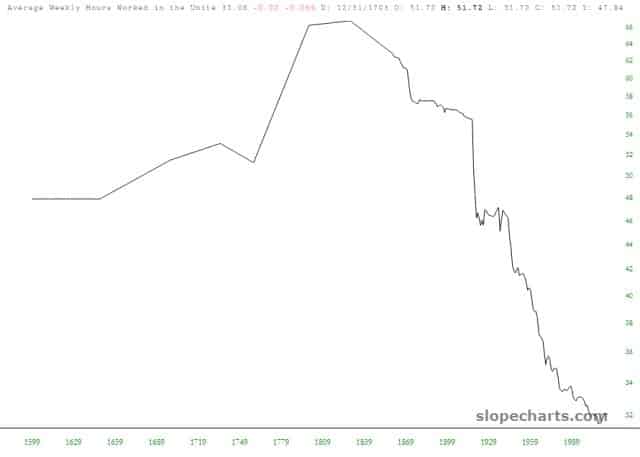
(more…)It’s a holiday weekend, so I suspect a lot of folks are enjoying time with friends and family. I elected to invest part of my Saturday exploring the new SlopeCharts economics data panel (yeah, it’s sad). I stumbled upon this little gem, which is the average workweek in Britain from 1599 to present (the easy-to-remember symbol is FR:AWHWUKA). It seems to have peaked around 1829 at nearly 70 hours a week! I suspect those folks would consider modern-day folks to be dilitentes.