

Since I’ve managed to wade into the waters of politics and religion in the past without mortal harm, let me up the ante and go where no one sensible has gone before…………race. Fellow Sloper TNRevolution has a much longer (and better) post than this one waiting in the wings, but I’ll probably publish that one Thursday afternoon.
This has obviously been a big topic in this country since, oh, about 1620, as well as quite recently. I’d like to comment on it by way of a personal experience. I’d like to use this to offer an idea about a distinction I see between prejudice and bigotry.
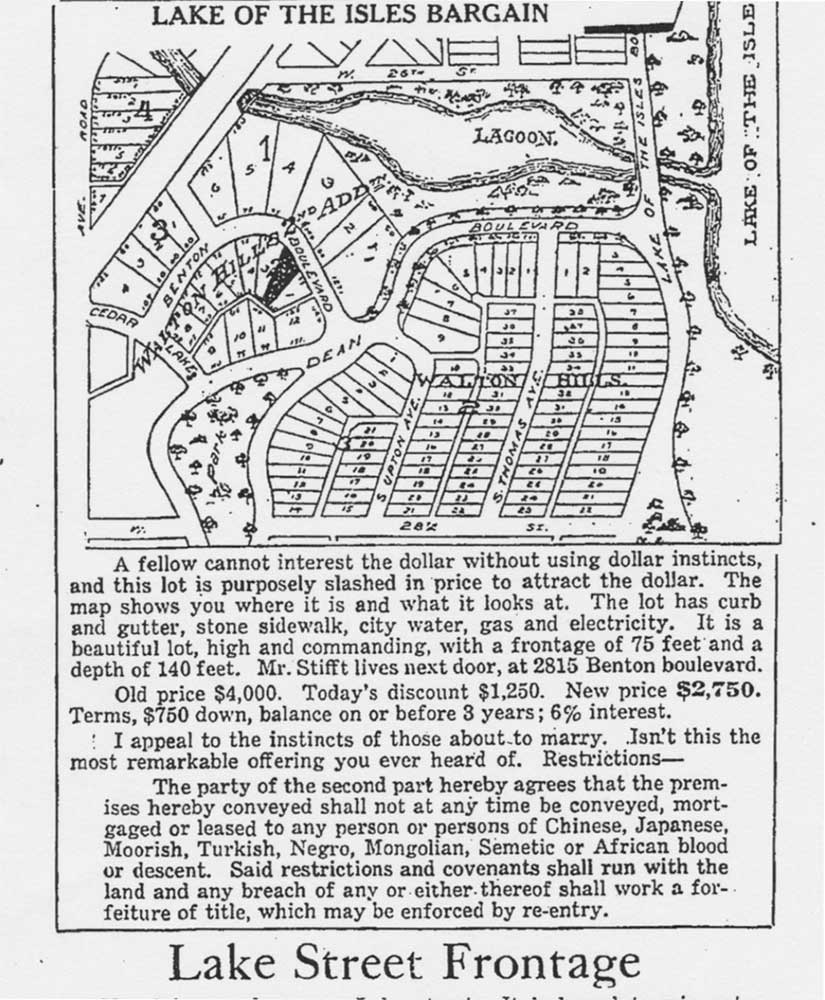
For all its progressive pretense, Palo Alto is no saint. It wasn’t that long ago that there was a specific street in my otherwise very rich neighborhood where the black people were expected to live. There’s was nothing subtle about it. It was the one black street of Crescent Park. That’s where I live.
Of course, there are no more “covenants” anymore. But there are definitely more black folks on my street than anywhere else in Palo Alto.
My understanding of the word prejudice is that it means to pre-judge. In other words, to make assumptions about a person based, for example, on their superficial appearance. With that understanding, I will absolutely affirm I am prejudiced. Probably more than most people. I am judgmental in general, and that also applies to stereotypical assumptions. Guilty as charged.
So let’s imagine a hypothetical circumstance: a new neighbor is going to move to my street, but I’ve actually got a choice between the two candidates. One is a prospective black neighbor. The other is a Chinese neighbor. And, for some crazy reason, I have to choose which of these people, each of whom is capable of buying a property on the street, gets to buy a house on my street.
So I choose the Chinese guy.
Now let me tell you what a bad choice that actually was, irrespective of how wrong or right you might think I was in making that decision in the first place. Let’s talk about actual people instead of hypotheticals. It is illustrative of how bad prejudicial assumptions can sometimes be.
In reality, the black neighbor on the other side of the street keeps his house beautifully. The lawn is nicely manicured. The paint is fresh. The roof is in good repair. Indeed, that particular family has lived here longer than I’ve been alive. The man who owns the property was actually recruited by the NFL but he turned his back on all that money so he could focus on raising his child, since the mother was unfit to do so. In short, a good guy, and a good neighbor. That’s the fellow which, in the hypothetical choice I gave above, got my “no” vote.
And how about the Chinese guy who lives a few doors down and whom, in my little pretend scenario, I selected as a new addition to our block? Well, he’s a nut-job. His yard looks like someone threw a bomb at it. He has painted his house a ghastly bright yellow. He has sued one of his neighbors multiple times, merely because she has objected to all his rubbish and troublemaking over the years. I guarantee you, every person on the street would love to see him gone. And that’s the guy who got my “yes”.
Thus, my prejudice was dead wrong. If I had the power to have made the above selection, I would have actually made myself worse off, based on a bad assumptions. Yet I’m at least capable, in the here and now, of recognizing who is the better neighbor (since anyone smarter than a rock would do the same). A bigot, from my understanding of that word in this context, would still look no farther than the skin color. And how pig-headed that would be.
There’s no virtue signalling here. I feel strongly enough about something things that I would absolutely march in a protest for them, but this isn’t one of them. I will say, however, that I think it’s important we draw lessons from our own experiences and our own thinking, even if we recognize it as flawed and faulty.
My day to day experience with seeing how actual people – – true individuals, not just racial tropes – – live and work throughout the course of our collective lives – – is more instructive than whatever biases I have garnered over the years. So my thinking is broken, but I at least try to recognize what needs repair. And it need not be a public declaration, or a march.
