
This is a long one. But enough about me. To lay the foundation for this post, allow me to state a couple of strong beliefs that I possess. Please keep your hands and feet inside your vehicle at all times as we move through these thoughts. Here we go.
Birth and Projection
The first is that I believe people are, on the whole, born and not made. That is to say, nature constitutes a person’s personality much more than nurture. A one-hour old baby is almost identical to the same human eighty years later, except that he’s acquired a bunch of real-world knowledge along the way (plus has gone through a million different versions of his body along the way).
For example, I’m a dog person. I was born that way. It wasn’t because, unlike my own children, I was surrounded by dogs from birth (N.B. the first word out of my children’s mouths wasn’t ma-ma or da-da, but dog; I have a special pride in that). Although I had a couple of dogs during my youth, they weren’t really “mine” and I hardly remember anything about them. However, when I reached adulthood, my first instinct, shared with my girlfriend (now wife of many decades) was we have got to get a dog. I was born that way. So was she.
I’m also an equity bear. I have no idea why. It’s not because I was dropped on my head or drank some crazy serum. Something about the way I’m wired has a propensity to see how things could go wrong as opposed to seeing how things can go right. This has not been an advantage while living through the biggest multi-decade equity rally in human history. However, this natural tendency to perceive prospective dangers has been invaluable to me as a father. I was born that way. I will sense the danger long before anyone else.
The second belief I have is that people tend to project their own nature onto the rest of the world. My favorite example has to do with trust. I tend to trust people. I tend to assume good intentions. If a tradesman shows up to my house to do some work, I don’t hover over him to make sure he’s not stealing things. I leave him to it, tell him to text me if he needs me, and return to my home office downstairs to do whatever it is I was doing. He is in a position to steal just about anything he wants and get away with it. No one ever has. I’m not surprised, either.
Some folks would call this naive. Some would smirk that I’m going to get ripped off. I have a neighbor, who’s a total whack job, who hired some men to replace his roof, and he spent day after day sitting in the hot sun watching them like a hawk, because he didn’t trust them to do a good job. Some folks assume others are, like them, decent and trustworthy whereas others think humans are lying sons of bitches that have to be watched at every moment. I’m in the first group. My neighbor, on the other hand, lives alone and is a desperately sad person. He’ll die that way.
Here’s a pro tip for you: if you encounter someone who doesn’t trust others, you can bet that they are not trustworthy. They know that they themselves are deeply flawed, and they are projecting those shortcomings onto the rest of the world. It’s not that they are correct in nervously watching others around them, expecting to get robbed. Instead, the observer himself – – the one who doesn’t trust others – – is the one who should not be believed or trusted. Their own flaws are being reflected back to them as if by a mirror.
This is not to say that humanity is populated with nothing but angels. Human decency, like everything else, is spread across a distribution curve, and over there on the left 5% are some real scumbags (some of whom are featured on financial television regularly). My point is that the vast majority of people are decent, and some of them are exemplary.
Philosophical Foundations
Although most of what I write about is focused on the markets, politics is so intertwined with finance these days that it’s difficult not to reveal my political leanings. Observant readers recognize I am principally a libertarian, and while I have lived most of my life with very little concern about what goes on in D.C., the recent administration has made me uneasy enough that I’ve said some less than flattering things about it from time to time. My opinion of this administration worsens by the day.
My overarching concern is how dark a view the nation’s leadership seems to have about humanity as a whole. Recent rantings by the persistently pissed Stephen Miller brought this front and center for me, since he left nothing to the imagination about why the U.S. should simply take Greenland. His point of view is that this is a world where nothing but power matters, and the U.S. is going to take Greenland whether anyone likes it or not, and if anyone has an issue with that, tough shit.
Here’s his boss, diligently repeating the sentiment of his Deputy:

No Parking
Let’s switch gears for a moment. How would you like to have me as your neighbor?
It really isn’t so bad. I’ve put seven figures of cash into improving my home. My wife keeps the garden lovely. I’m always friendly to those who pass by. My dogs may bark sometimes, but I try to keep a close eye (or ear) on that. I honestly have one and only one rule that might faze you: please don’t park in front of my house.
Why is that? Well, in case you’ve ever puzzled how I can still love charts after spending over 40 years looking at them, it’s because I am preternaturally visual. Part of being visual is that I’m an aesthete, and when I walk out my front door, the last thing I want to see is a car. Anybody’s car. Even one from a family member. It’s an ugly greeting for my eyes.
Now, I don’t have any special rights to the street. My rights end at the sidewalk. If they wanted, neighbors could use the entirety of the street in front of my house morning, noon, and night for parking. However, out of a combination of basic courtesy and the fact that I have ever-so-gently, over a period of decades, made my preference known, 99.9% of the time the street in front of my house is gloriously devoid of anything except asphalt with maybe a few magnolia leaves sprinkled on top.
My view is that there is the letter of the law and, beyond that, courtesy. The letter of the law states that the street is public property, not mine, and that I cannot demand anyone move their car. Courtesy, on the other hand, is not in any of Palo Alto’s municipal codes. However, in virtually all cases, folks decide to be courteous and park their car on, oh let’s say, their own driveways, just because it’s the right thing to do.
I will hasten to add that in the thirty-five years I’ve lived here, I have probably parked my own cars on the street a grand total of a few hours, and only when it was absolutely necessary. I try to be the change I want to see in the world, or at least the kind of driver.
Thus, decency has won out. It didn’t take an iron fist. It didn’t take the police or ICE. It didn’t take Stephen Miller and his weirdly thick, wet lips spewing invectives. It just took a polite expression of a desire and, in return, ascension, which I appreciate. The world I want to live in features homo sapiens which are cognizant of each other’s desires and, within reason, align their actions with them.
And thus, having come this far, we are going to take a philosophical turn and contrast two giants of modern philosophy, Hobbes and Locke. Thomas Hobbes and John Locke are two foundational figures in modern political philosophy. Both use the concepts of a “state of nature” and a “social contract” to explain the origins and purpose of government, but their worldviews differ dramatically. Hobbes takes a deeply pessimistic, materialist view of human nature, while Locke adopts a more optimistic perspective grounded in natural rights and reason. These contrasting assumptions about humanity profoundly shape their political theories.
Thomas Hobbes: A Mechanistic Worldview
Hobbes views the universe and human beings through a materialist lens, seeing everything—including human behavior—as governed by mechanical laws similar to those of physics. He regards humans as fundamentally egoistic, driven by appetites, aversions, and an overriding desire for self-preservation. There is no innate moral order; people act primarily out of rational self-interest to avoid harm. Life is inherently competitive, and individuals are roughly equal in their ability to harm one another, creating constant fear and insecurity.

This bleak assessment of human nature leads Hobbes to describe the state of nature as a “war of all against all,” where life is “solitary, poor, nasty, brutish, and short.” Without a common authority, there can be no industry, culture, or lasting security, because everyone judges for themselves and conflicts inevitably escalate into violence.
To escape this chaos, individuals enter into a social contract: they mutually surrender their natural right to do anything necessary for self-preservation and transfer absolute authority to a sovereign. You can imagine this along the lines of Viktor Orbán or Donald Trump, and this is in the same spirit of the “daddy issues” accusations I hurl on occasion. This sovereign—whether established by agreement or conquest—holds undivided power over law-making, judgment, enforcement, and every other function of government. Any division of power risks paralysis or civil war.

Hobbes argues that subjects owe complete obedience to the sovereign, with no right of rebellion. Even tyranny is preferable to returning to the horrors of the state of nature. Political obligation arises from consent combined with the fear of anarchy, and it lasts as long as the sovereign can provide protection. Hobbes thus justifies absolute sovereignty as the only rational solution to humanity’s destructive tendencies, prioritizing order and security above individual freedom.
John Locke: An Optimistic Worldview
Locke takes a far more positive view of human nature. He believes people are born as blank slates shaped by experience, but inherently free, equal, and rational. Under God’s natural law, every individual possesses inalienable rights to life, liberty, and property. Humans are capable of reason and moral understanding, and natural law commands them to preserve mankind and forbids harming others without just cause.
In Locke’s state of nature, people are free and equal, and most can live together peacefully under the guidance of natural law. However, the state of nature is inconvenient: there is no impartial judge to settle disputes, and individuals tend to be biased when enforcing their own rights. This opens the door to potential conflict, though it is far less violent and chaotic than Hobbes’ vision.
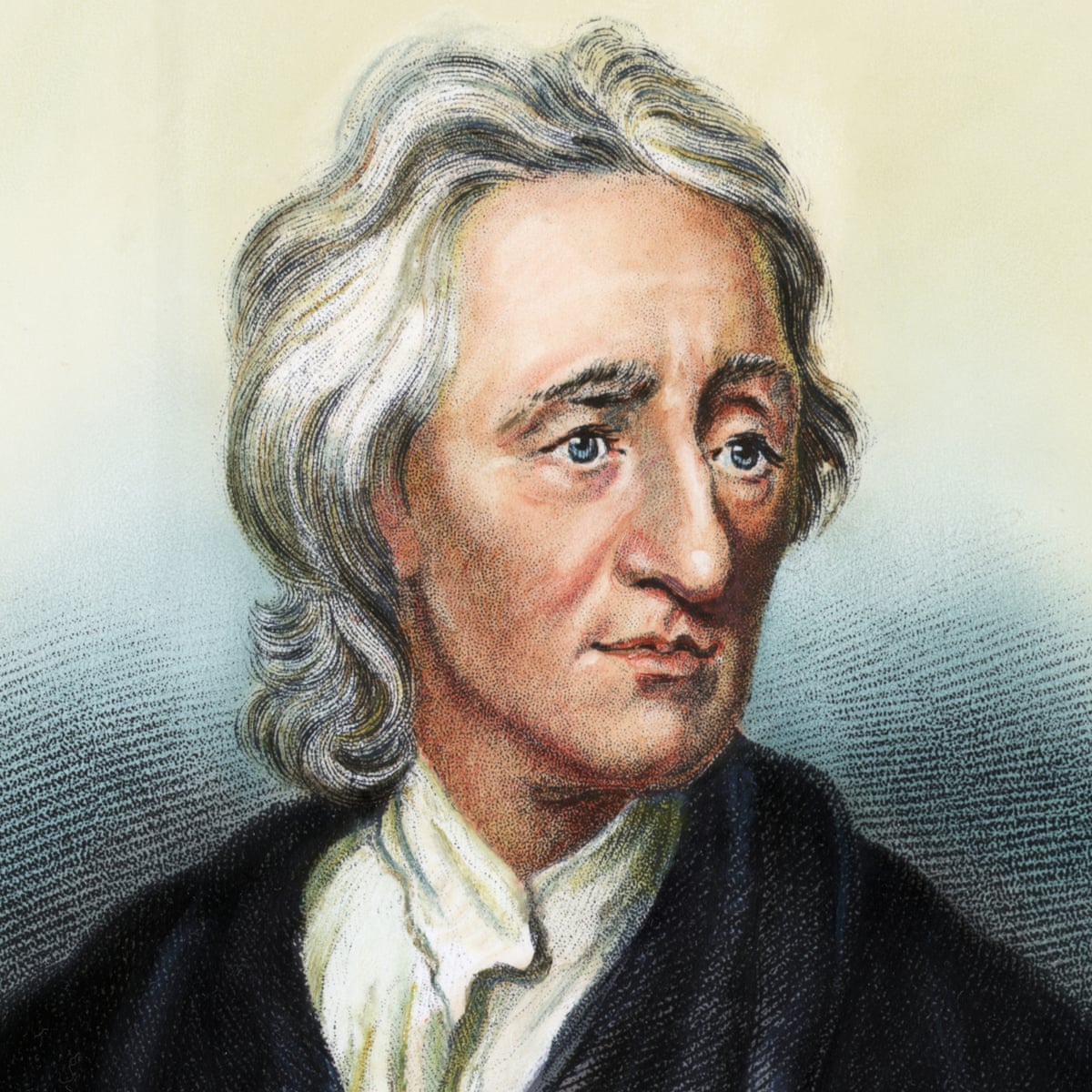
To address these inconveniences, people form a social contract and consent to establish a government whose sole purpose is to protect their natural rights and promote the common good. Government power is limited and conditional: individuals give up only the rights necessary to achieve these ends, while retaining their fundamental freedoms. The people remain the ultimate source of sovereignty. This kind of thinking was the foundation of our nation’s founding, our Declaration of Independence, and our Constitution.
Locke advocates for separation of powers—legislative (to make laws), executive (to enforce them), and federative (to handle foreign affairs, and what we might refer to as a judicial branch in modern times)—to prevent any one branch from becoming tyrannical. Legitimate government rests on the consent of the governed, expressed either explicitly or tacitly. If a government violates the people’s rights, acts arbitrarily, or becomes destructive of their liberty and property, the people have the right to resist and even to revolution in order to restore just rule.
Locke’s philosophy thus defends limited government, individual rights, and accountability, viewing political authority as a trust that can be withdrawn when it is abused. Locke was my kind of guy. This is also why I don’t fret when a bunch of dogs get together. Evolution hasn’t created creatures which desire to tear each other to pieces. They recognize – – far more than certain humans do today – – that cooperation, respect, and the collective good all matter as well as their own individual happiness, and even if snarling happens here and there, they almost always work it out quickly.
How Worldviews Shape Political Outcomes
Both Hobbes and Locke use social contract theory to explain the creation of government, and both reject the idea of divine right monarchy in favor of legitimacy based on consent. Yet their radically different assumptions about human nature lead to opposite conclusions about the proper form of political society.
Hobbes sees humans as naturally selfish, violent, and untrustworthy, requiring an all-powerful sovereign to impose peace. His contract involves total surrender of individual rights in exchange for security, resulting in absolute authority with no right of resistance.
Locke, by contrast, believes humans are rational, capable of cooperation, and endowed with natural rights. His contract preserves those rights and creates a limited government that serves the people, who retain the ultimate power to hold rulers accountable—including through revolution if necessary.
In essence, Hobbes’ fear-driven realism (picture the bald, raging Stephen Miller again) supports strong, centralized authority (AKA General Bonespurs) to prevent societal collapse, while Locke’s rights-based optimism underpins liberal democracy, emphasizing liberty, consent, and the protection of individual freedoms. Their contrasting worldviews continue to frame fundamental debates about the balance between order and freedom in modern political thought.
Having said all that, allow me to feature one monstrous dweeb who is Hobbesian all the way from his slick head all the way down to his stinking feet:

This guy – – regrettably, an alumnus of Duke University – – has always struck me as positively abhorrent. His view of the world is every man for himself, dog eat dog, and whatever other metaphor you want to conjure up to evoke a place that is merciless and cruel. Sounds like a treat as a dinner companion, eh? It was particularly comic to watch his speech at the Kirk memorial where he was spewing and screeching about how he represents love, when any sentient observer would think they were watching the devil himself. I don’t get any love vibes from this guy. Just unalloyed contempt and hatred.
Having considered the disparate worldviews of Locke and Hobbes, I can better understand why there is such a chasm between how someone like me thinks and someone like the aforementioned ogre does. I’m highly confident that a Stephen Miller in 1943 Germany wouldn’t be so keen on the worldview that might makes right as he was ushered into the shower the Germans were providing to delouse him and his family, but deep down I guess it would all make sense to him, since, ya know, power is all that matters. It’s all fair on this wretched earth, ain’t it, Stevie?
Of course, there are plenty of others with this mindset, such as the brutish gastropod below, whose own behavior and erudition make Stephen Miller seem like William F. Buckley in contrast.

Reconciled
By thinking about the fundamental political divisions in this manner – – by way of a philosophical lens – – it allowed me to reconcile something which heretofore I had found irreconcilable. Blue versus Red. Maga versus Woke. Newsom versus Trump. The list goes on. The “United” States is anything but that, and in a way I’ve never felt before in my entire life. But at least this fundamentally different perspective explains a lot.
This rubric first challenged me when, to my horror, I found out that some of my beloved Slopers actually dig people like those I’ve mentioned, almost to the point of idolatry. It seemed inconceivable that anyone with sense enough to hang out here and read what I write might think differently than I do. This was clearly naive on my part. As I’ve tried to explain, some people are born with a Hobbesian mindset, and others align with Locke. It’s a combination of genetics, their parents’ behavior and politics, the era in which they grew up, and the region of the country where they were raised. Just because someone digs my charts and dick jokes doesn’t mean they share any of these other traits.
The easy thing for someone like me to deduce about someone like a Stephen Miller is that he’s just cold, heartless, hateful, and vile. I’d bet you any amount of money that he and I could stand next to one another, and upon releasing fifty random dogs, almost all of them would come to me instead of him. He probably throws off an utterly dark aura, and you can see it in every leering, sneering photo ever taken of the man. I can only imagine how his offspring are going to turn out, particularly considering his wife is obviously cut from the same cloth.
Yet I suppose his behavior and rantings are much easier to understand if one allows for a worldview which is, at its core, terrified. Let’s have Yoda chime in on this:
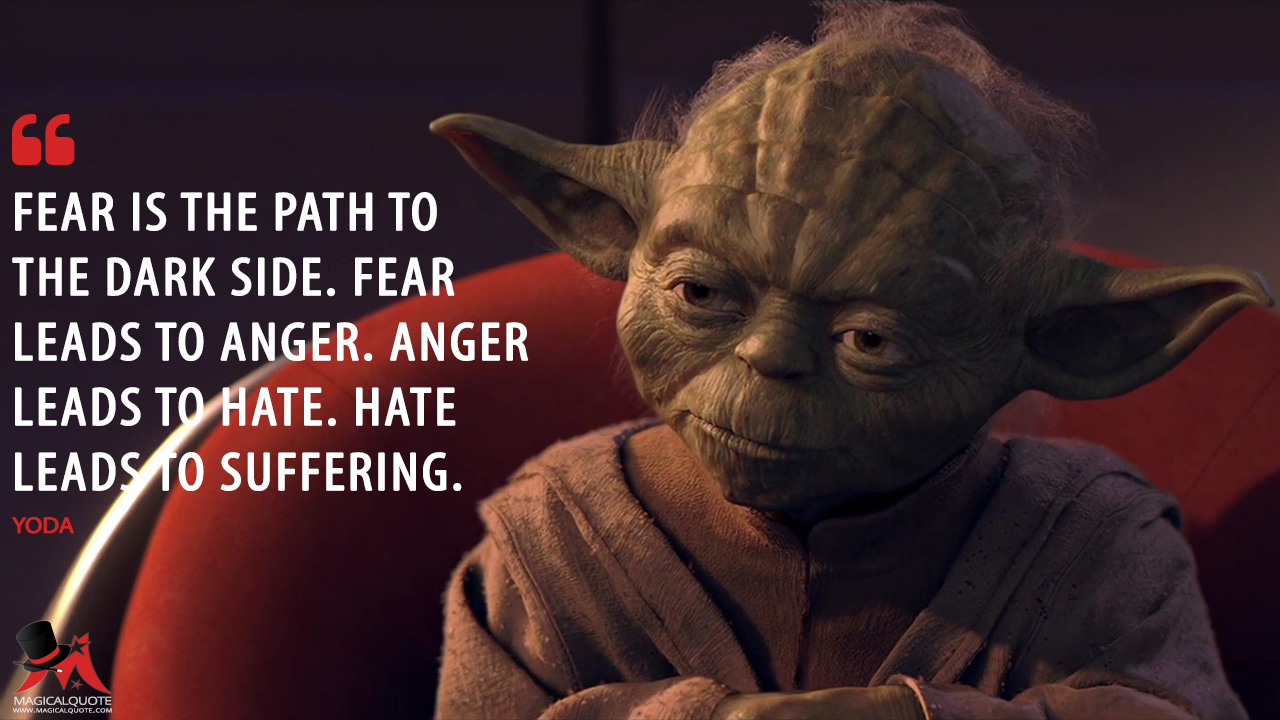
The Fourth Wave is all around us, and the suffering is only just starting. My principal task is to shield my own family from it.
As for Slope, I try not to write much about politics much anymore because it finally got through my thick skull that I’m not about to change anyone’s mind about anything, and the above thinking simply deepens my conviction that a person’s worldview is largely established at birth. Yes, I think babies come with a political philosophy. They’re just born that way, and they’re not going to change me and I’m not going to change them. Every single one of you is convinced of their own rightness, as am I. It’s only logical.
Oh, Tim. Bless Your Heart
Physical strength can be visually perceived. Intellect cannot. I am not going to stroll into a gym and pretend I’m as strong and tough as the people there. I can’t lift what they can lift. I can’t run as long as they can run. I’m just – – – normal. Not weak, not strong. Not skinny, not obese. Just living inside a normal body which I neither abuse nor edify. I wouldn’t stand out in a crowd at all.
Intelligence isn’t like that. Not to put too fine a point on it, but the problem with stupid people is that they’re too stupid to know they are stupid. Worse yet, they’re sometimes so stupid that they think they’re smart, which is agonizing for someone who actually has a few IQ points to rub together. Yet there’s nothing to be done about it. I’ve had to deal with those types from when I was a child. Humility is in short supply, and most dimwits assume that they’re on the same footing as their betters. They aren’t.
Thus, some lunkheads might hear about my point of view, shake their heads, and think, oh, poor old Tim, that’s just not the way the world is, bucky. You live in a bubble, and you’re soft, and you’re weak, and you just don’t know what the real world is like.
My reply: Quod erat demonstrandum.
Our world isn’t a maximum-security prison. Within such a place, I could actually understand an ethos of brutality, terror, and every man for himself. That sort of place is for the worst of the worst. It is there for the far-left chunk of the bell curve of society, not for society as a whole. I do not subscribe to the notion that humanity at large is of the same mindset as homicidal maniacs. We put those people away for a reason.
There are child molesters out there among us, and I cannot understand them nor can I change them. The same goes for rapists. And arsonists. And sadists. In the same way, I cannot change insane political thought either. I used to try from time to time, but there’s no point. People are who they are. They were born that way. Their own rationale assures them that they are thinking properly, acting properly, and are every bit as good as everyone else. Self-reflection just isn’t their thing.
From my point of view, all I can say is “One year down, three to go” and hope, pointless as it is, that once we emerge from all this that things are more-or-less intact or at least reparable, which is seemingly increasing questionable. The world is looking very ugly, but it hasn’t altered my view about true nature. I have every confidence America will be vastly weaker than it has been in many decades, but I won’t be waiting for anyone to come to me, lay down their flawed assertions from the past at my feet, and tell me they were sorry. They will embrace their own rightness until they’re stone-cold dead.
The Fourth Wave is real. It’s right in front of us, and it has many months to go. Some of you have my perspective. Some do not. Yet our responsibilities to ourselves and each other are, like it or not, uniform.
Be in the light. Do not get enveloped by the darkness, pervasive though it may be. And carve out the time and space to consider how to sanctify yourself, because although most of our constitution is innate, I still believe we have the strength to elevate ourselves.
As for the horrors around us, both now and those to come – – this, too, shall pass.