

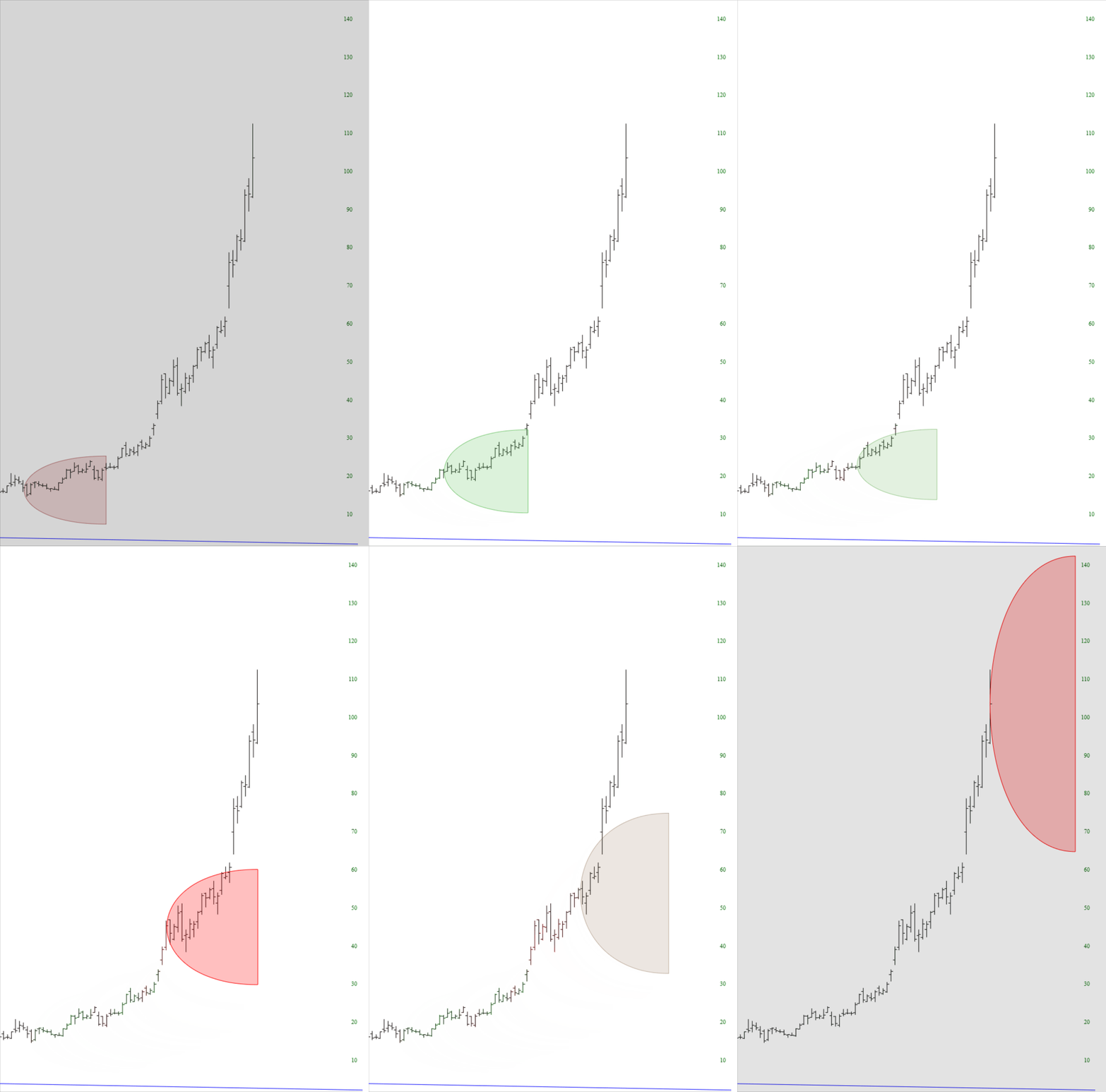
Since these days, words fail me, I can only let a moving picture do the talking. Witness here the price cone of Overstock:

Slope initially began as a blog, so this is where most of the website’s content resides. Here we have tens of thousands of posts dating back over a decade. These are listed in reverse chronological order. Click on any category icon below to see posts tagged with that particular subject, or click on a word in the category cloud on the right side of the screen for more specific choices.
Since these days, words fail me, I can only let a moving picture do the talking. Witness here the price cone of Overstock:
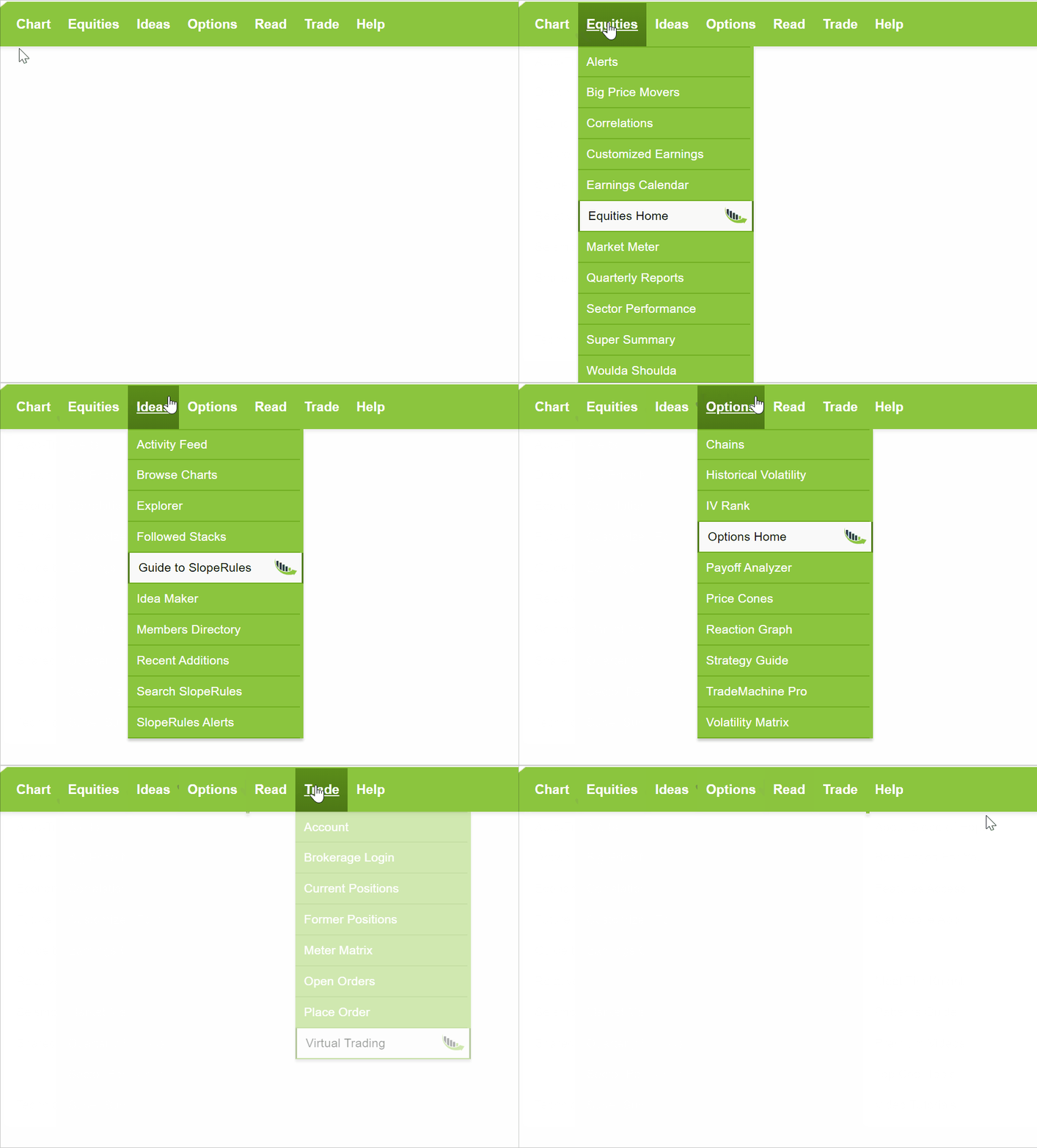
This is going to be trivial, but honestly, take a fresh look at all the menus on the site. Honestly, this isn’t just a lazy post on my part. There have been a lot of modifications, changes, and additions, and you’re bound to find a few things you never knew were there. I would especially like my virtual trading testers to dive right in, since there have been dozens of tweaks.
Those who have lived with me in the past, whether it be college roommates or my own family, can attest that it’s a living nightmare I am very hung-up on order and tidiness. The same applies here on Slope.
Recently, I have been rearranging elements on Slope in order to make room for trading. For clarity’s sake, here are a few important changes: first, there is no “Blog” menu anymore. It is now called “Read“:

The rapid pace of new products and improvements has recently slowed for one simple reason: I am putting all of our efforts into trading integration, so that being on Slope is going to be a one-stop shop for your entire trading life.
As an important step to that, we are building out paper trading. I am looking for smart, dedicated testers who know a lot about options trading to help us test this. If you’d like to participate, please drop me an email. We could use your help!

As a follow-up to yesterday’s announcement that SlopeRules have been substantially upgraded, I thought I’d walk you through a simple example of rule creation.
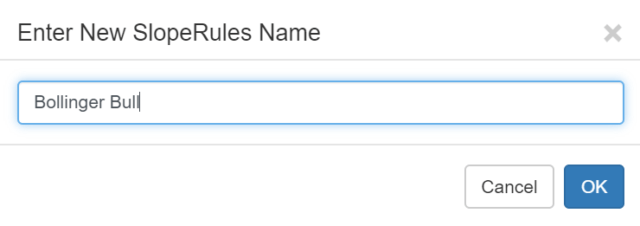
Let’s say I wanted to create a bullish rule triggered by Bollinger Bands. So I’d create a new rule set and give it a name………..